


SKU #67227
·
32 views
Marka
Pumpkin
VNIIOOBUser rating
0 votes0% positive reviews
No ratings yet — be the first.
Pumpkin Type
Muskatnaya
Registration year
2010
About product

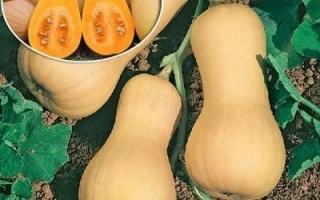
A reliable mid-season butternut pumpkin variety, known for its high sugar content and excellent storage capabilities.
Pumpkin Type
Muskatnaya
Registration year
2010
Description
A Benchmark in Butternut Breeding from VNIIOOB
The 'Marka' pumpkin variety is a cornerstone of the breeding program at the All-Russian Research Institute of Irrigated Vegetable and Melon Growing (VNIIOOB). Designed for commercial agriculture, this mid-season butternut variety has carved out a niche for growers who prioritize consistent yield, culinary excellence, and exceptional shelf life.
Key Botanical and Agricultural Traits
As a member of the Cucurbita moschata family, 'Marka' is defined by the qualities that define top-tier butternut squash: a rich, dense, vibrant orange flesh and a high sugar content. Professional producers favor the variety for its uniformity, which ensures that harvested batches meet the rigorous size and shape standards required by retail and processing markets.
- Maturation: The variety offers a predictable growth cycle, allowing for streamlined crop management in irrigated farming regions.
- Versatility: With a high dry matter content, 'Marka' is an excellent candidate for both the fresh market and the industrial processing sector, particularly for purées and juices.
- Durability: The fruit features a sturdy rind, providing significant protection during transit and enabling extended storage throughout the winter without sacrificing internal quality.
Market Positioning and Performance
In a competitive market often dominated by imported hybrids, 'Marka' from VNIIOOB stands as a reliable, locally-adapted solution. The institute’s location in the Astrakhan region has allowed researchers to fine-tune the variety to thrive under high temperatures and water-stressed conditions—common challenges in intensive vegetable production. This resilience ensures that the plants maintain productivity even when weather conditions fluctuate.
For the modern farmer, selecting 'Marka' is a strategic decision. It represents a balance between biological stability and the premium taste profile consumers expect from high-quality butternut squash. It is not merely a commodity; it is a proven tool for those who demand high-yield potential combined with the long-term storability necessary for profitable season-long marketing.
Crop & resistance
Crop
Specifications
| Pumpkin Type | |
|---|---|
| Registration year | 2010 |
| Catalog | Catalog → Pumpkin |
| Manufacturer | VNIIOOB |
| Legal data | |
| Country | Russia |
Store offers
Prices are updated on loadLoading offers…
Aggregator catalog: prices are collected automatically from store websites, normalized by AI and converted at the current exchange rate. Before ordering, confirm the price and availability on the store's website. This block is not indexed by search engines — the data is loaded after the page opens.
Not yet комментариев. Be the first!
Alternatives
Pumpkin seeds · similar varieties





See also
Often considered together with this variety


Recently viewed
Products you’ve viewed on this site
Reviews · 0