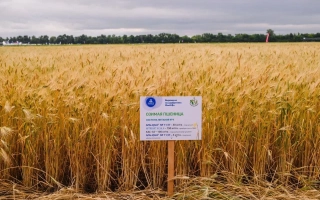
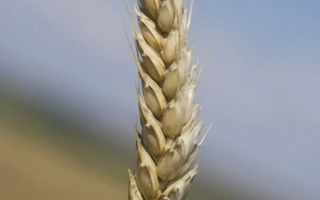
Tarasovskaya Ostistaya is a variety of soft winter wheat (Triticum aestivum L.), characterized by medium-early maturity and medium height. Plants reach a height of 85-95 cm, featuring a cylindrical white ear 7-9 cm in length with awns 5-6 cm long, positioned at an acute angle to the ear axis. The variety's grain is ovoid, red in color, with a mass of 1000 grains ranging from 43-45 g. The variety is noted for its high plasticity and adaptability, successfully cultivated in various climatic conditions, including the Central Black Earth and North Caucasian regions, and recommended for the Rostov region. Tarasovskaya Ostistaya exhibits high winter hardiness and frost resistance, along with drought resistance above average levels. It is resistant to lodging and demonstrates strong resistance to several diseases, including septoria, brown rust, powdery mildew, and common bunt. According to the originator, the variety also shows high field resistance to rusts, snow mold, viral diseases, and root rots, making it a reliable choice for agricultural production. Baking qualities of the variety are at a high level: protein content reaches 16.6%, gluten is 38.4%, ensuring excellent technological indicators and high flour quality. The loaf volume from this variety's grain is approximately 1100 cm³, and the overall assessment of baking properties is 4.5 points. The variety responds well to various predecessors and is tolerant to sowing dates, quickly forming a tillering node. Due to these characteristics, Tarasovskaya Ostistaya is widely used in agriculture as a high-yielding and quality agropmodity.