


SKU #52547
·
72 views
Potato BALTIK ROSE
Potato
NORIKAUser rating
0 votes0% positive reviews
No ratings yet — be the first.
Direction
Table Potato
Beginning of fruiting
65-75 days
Corm; shape
Oval
Corm; skin color
Red
Prices in stores
from0.74 €per 1 kg
pack from 0.74 € per 1 kg
6 offers from 4 stores
Store offers · 6 from 4 stores
Prices are updated on loadLoading offers…
Available at: Agrolife · Florium · Кліома Сервіс · Луцена · Megasad · Polesad
Aggregator catalog: prices are collected automatically from store websites, normalized by AI and converted at the current exchange rate. Before ordering, confirm the price and availability on the store's website. This block is not indexed by search engines — the data is loaded after the page opens.
About product

Potato variety Baltic Rose is a medium-early table variety of German selection with a vegetation period of 60 to 90 days. Plants of this variety have medium or high height, upright or semi-upright, with green, closed leaves of medium size and a medium-intensity anthocyanin-colored flower. Tubers are oval-shaped with smooth bright red skin and yellow flesh, weighing 95 to 125 grams. Shallow eyes fa…
Direction
Table Potato
Beginning of fruiting
65-75 days
Corm; shape
Oval
Corm; skin color
Red
Description
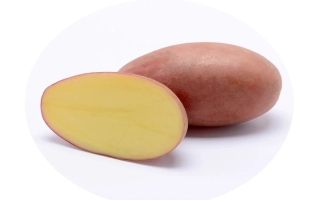
Potato variety Baltic Rose is a medium-early table variety of German selection with a vegetation period of 60 to 90 days. Plants of this variety have medium or high height, upright or semi-upright, with green, closed leaves of medium size and a medium-intensity anthocyanin-colored flower. Tubers are oval-shaped with smooth bright red skin and yellow flesh, weighing 95 to 125 grams. Shallow eyes facilitate peeling, while uniform size and shape ensure high marketability, reaching 92%. Starch content varies from 11.5% to 14%, making this variety versatile for various cooking methods: boiling, frying, baking, salads, and mash. Baltic Rose is characterized by high yield, up to 47 tons per hectare, and excellent storability—up to 97%—allowing storage of tubers for up to six months without loss of quality or appearance. The variety is resistant to various viral and fungal diseases, including potato leaf roll virus, leaf curl, potato virus Y, and golden potato cyst nematode. Thanks to these characteristics, along with its attractive appearance and stable yield, the variety is suitable for cultivation in both private gardens and commercial purposes, especially in southern regions. For optimal yield, it is recommended to grow Baltic Rose on fertile, loose soils while following standard agronomic practices, including uniform seed treatment before planting. The universal culinary type AV/BC allows using this potato in diverse dishes, making it popular among consumers. High transportability and disease resistance ensure product preservation and quality throughout storage and marketing periods.
Video · 8 videos
Suggest a video →Crop & resistance
Crop
Disease resistance
Pest resistance
Specifications hover over for a hint about the specification
|
Direction
Direction
Existing varieties and types of cabbage are grown for fresh consumption, long-term storage, and technical processing. |
|
|---|---|
|
Beginning of fruiting
Beginning of fruiting
The early maturity of watermelon varieties mainly depends on the duration of growth and fruit ripening phases, rather than the timing of female flower blooming. Many varieties, ripening at different times, begin to bloom almost simultaneously. Approximately 30 days after fruit se... |
65-75 days |
| Corm; shape | |
| Corm; skin color | |
| Corm; flesh color | |
| Corm; skin structure | |
| Cormorant; eye depth | |
| Corm; mass | 50-130 grams |
| Starch Content | 11-12%, 12-13%, 13-14% |
| Registration year | 2019 |
| Catalog | Catalog → Potato |
| Manufacturer | NORIKA |
| Legal data |
Show · 1
|
| Country | Germany |
Not yet комментариев. Be the first!
Alternatives
Seed potatoes · similar varieties




See also
Often considered together with this variety


Recently viewed
Products you’ve viewed on this site
Reviews · 0