

SKU #46206
·
67 views
Bere Zhyffar
Pear
User rating
0 votes0% positive reviews
No ratings yet — be the first.
Ripening Period
Summer
Disease Resistance
To the rash
Fetal Size
Fine (<120 g)
Fruit Color
Brown
Store offers · 4 from 4 stores
Prices are updated on loadLoading offers…
Available at: БаТаня · Drevolaz · Posadka · Sadco · Сади Буковини · Семена Буковины
Aggregator catalog: prices are collected automatically from store websites, normalized by AI and converted at the current exchange rate. Before ordering, confirm the price and availability on the store's website. This block is not indexed by search engines — the data is loaded after the page opens.
About product

Bere Zhyffar Pear — an early-ripening variety developed in France in 1810 by breeder N. Zhyffar. The medium-sized tree with a spherical, sparse, spreading and drooping crown and slender branches reaches a height of about 4 meters. It begins fruiting early, and harvest can be collected 3–4 years after planting. Young saplings may be damaged by frost, but frost resistance increases with age, so wint…
Ripening Period
Summer
Disease Resistance
To the rash
Fetal Size
Fine (<120 g)
Fruit Color
Brown
Description
Bere Zhyffar Pear — an early-ripening variety developed in France in 1810 by breeder N. Zhyffar. The medium-sized tree with a spherical, sparse, spreading and drooping crown and slender branches reaches a height of about 4 meters. It begins fruiting early, and harvest can be collected 3–4 years after planting. Young saplings may be damaged by frost, but frost resistance increases with age, so winter covering is recommended in northern regions. The culture is resistant to scab, but occasionally susceptible to white spot and fruit rot.
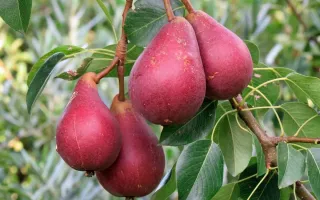
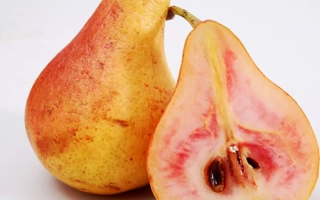
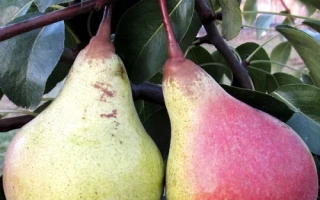
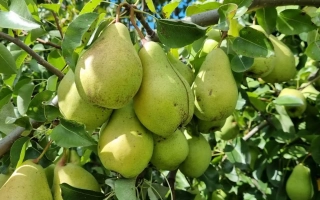
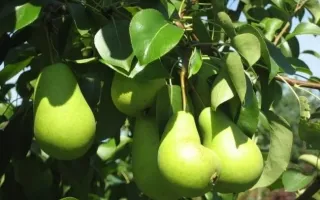
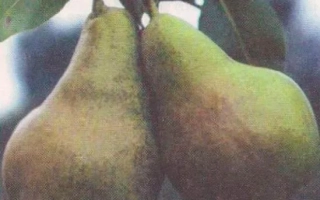
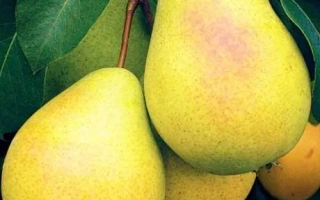
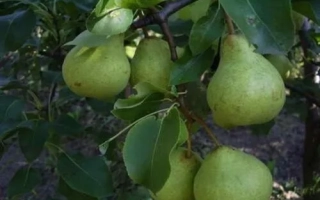
The fruits of Bere Zhyffar pear have a regular pear shape and weigh from 75 to 120 grams. The skin is thin and tender, green when picked, then turns greenish-yellow with a bright blush on the sun-exposed side. The fruit surface is covered with light-brown spots. The flesh is white, tender, juicy with a fatty texture, slightly acidic-sweet, possessing an excellent dessert flavor with a pleasant acidity, rated on average 4.5 points. Fruits often set in clusters of 2–6 pieces and remain firmly attached to the tree until ripening.
Harvesting occurs in the third decade of July, approximately from the 20th to the 25th. Fruits ripen uniformly and simultaneously; they are recommended to be harvested before full yellowing, as overripe specimens lose flavor. Fruit storage life is 3–5 days, so it is better to consume them fresh. The main advantages of this variety are early ripening and high flavor quality, making Bere Zhyffar pear one of the most delicious early-ripening varieties.
The fruits of Bere Zhyffar pear have a regular pear shape and weigh from 75 to 120 grams. The skin is thin and tender, green when picked, then turns greenish-yellow with a bright blush on the sun-exposed side. The fruit surface is covered with light-brown spots. The flesh is white, tender, juicy with a fatty texture, slightly acidic-sweet, possessing an excellent dessert flavor with a pleasant acidity, rated on average 4.5 points. Fruits often set in clusters of 2–6 pieces and remain firmly attached to the tree until ripening.
Harvesting occurs in the third decade of July, approximately from the 20th to the 25th. Fruits ripen uniformly and simultaneously; they are recommended to be harvested before full yellowing, as overripe specimens lose flavor. Fruit storage life is 3–5 days, so it is better to consume them fresh. The main advantages of this variety are early ripening and high flavor quality, making Bere Zhyffar pear one of the most delicious early-ripening varieties.
Video · 3 videos
Suggest a video →Crop & resistance
Crop
Disease resistance
Specifications hover over for a hint about the specification
|
Ripening Period
Ripening Period
It takes 70-100 days until pepper reaches flowering stage, 130-160 days until technical fruit ripeness, and 135-180 days until physiological ripeness. |
Summer |
|---|---|
| Disease Resistance | |
| Fetal Size | Fine (<120 g) |
|
Fruit Color
Fruit Color
The fruit color of tomato varieties is influenced by the combination of skin and flesh color. Some varieties have transparent skin, others — yellow. When combined differently, the fruits can acquire quite diverse colors. The fruit color is affected by pigments (lycopene) and thei... |
|
| Flavor | |
| Meat Texture Consistency | |
| Laziness | |
| Height and shape of the tree | |
| Assignment | |
| Features | |
| Registration year | 1928 |
| Catalog | Catalog → Pear |
| Country | Ukraine |
Not yet комментариев. Be the first!
Alternatives
Pear saplings · similar varieties




See also
Often considered together with this variety






Recently viewed
Products you’ve viewed on this site
Reviews · 0