


SKU #46221
·
64 views
Pear Cythere
Pear
Prices in stores
from2.55 €per seedling
pack from 2.14 € per pack
5 offers from 5 stores
Ripening Period
Winter
Frost Resistance
High (up to -30°C)
Disease Resistance
To scab, To fruit rot
Fruit Size
Large (180–250 g)
Your mark
0 votes
0% positive ratings
Store offers · 5 from 5 stores
5 offers in 5 stores — from 2.55 € per seedling.
Available at: ВіоСад · Экосад · Сади Буковини · Сади Сад · Yaskrava Klumba
Prices are collected automatically from store websites and converted at the current exchange rate. Check the price and availability on the store website before ordering.
Description
Cythere is an old French variety of winter-ripening pear, discovered in 1760 by the priest Cythere Leroy in the Fromento forest. This variety quickly gained widespread popularity due to its high yields, excellent storability, and outstanding flavor. Cythere pears contain a high percentage of vitamin P, which contributes to improved digestive tract function. The variety is well adapted for cultivation in Ukraine, both in private gardens and on an industrial scale.
Medium-growing trees with a broad, dense, and well-leafed canopy, reaching up to 3 meters in height and about 2.5 meters in diameter. Under heavy fruit load, branches slightly droop, giving the crown a characteristic shape. Fruit production occurs primarily on 3-4-year-old wood, occasionally on 2-year-old wood and spur branches. Flowering is early, lasting approximately 12-15 days. The variety exhibits high cold resistance, and its resistance to scab and fruit rot allows successful cultivation under various conditions.
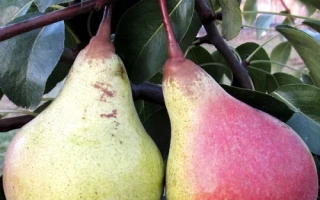
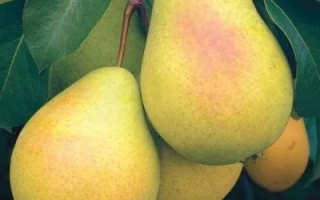
Cythere pears are large, weighing from 160 to 450 grams, with a pear-shaped, slightly asymmetrical form and smooth, thin to medium-thick skin. At harvest, the fruit is green, turning light-yellow upon ripening, sometimes with a faint pink blush and small skin spots. Occasionally, a characteristic rusty-brown stripe appears from the flower cup to the stem. The flesh is white, juicy, oily, tender, with a slightly acidic-sweet flavor and a mild bitterness that softens during storage. The fruit possesses a pleasant dessert aroma and improves in flavor with proper storage.
Medium-growing trees with a broad, dense, and well-leafed canopy, reaching up to 3 meters in height and about 2.5 meters in diameter. Under heavy fruit load, branches slightly droop, giving the crown a characteristic shape. Fruit production occurs primarily on 3-4-year-old wood, occasionally on 2-year-old wood and spur branches. Flowering is early, lasting approximately 12-15 days. The variety exhibits high cold resistance, and its resistance to scab and fruit rot allows successful cultivation under various conditions.
Cythere pears are large, weighing from 160 to 450 grams, with a pear-shaped, slightly asymmetrical form and smooth, thin to medium-thick skin. At harvest, the fruit is green, turning light-yellow upon ripening, sometimes with a faint pink blush and small skin spots. Occasionally, a characteristic rusty-brown stripe appears from the flower cup to the stem. The flesh is white, juicy, oily, tender, with a slightly acidic-sweet flavor and a mild bitterness that softens during storage. The fruit possesses a pleasant dessert aroma and improves in flavor with proper storage.
Video · 6 videos
Suggest a video →Crop & resistance
Crop
Specifications
| Ripening Period | Winter |
|---|---|
| Frost Resistance | |
| Disease Resistance | |
| Fruit Size | Large (180–250 g) |
| Fruit Color | |
| Flavor | |
| Flesh Consistency | |
| Keeping quality | |
| Height and shape of the tree | |
| Purpose | |
| Features | |
| Registration year | 1950 |
| Catalog | Catalog → Pear |
| Country | Ukraine |
No reviews yet. Be the first to share your experience.
Alternatives
Pear saplings · similar varieties






See also
Often considered together with this variety




Recently viewed
Products you’ve viewed on this site
Reviews