


SKU #65041
·
58 views
Ural
Oats
User rating
0 votes0% positive reviews
No ratings yet — be the first.
Ripeness Group (days)
Medium-maturing (95-110)
Yield
60+
Disease Resistance
Mottling, Rust
Mass of 1000 seeds (g)
32-36, 36-40
About product

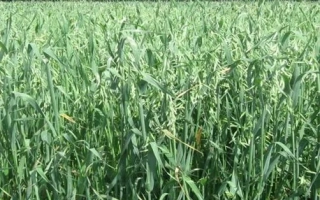
The spring oat variety "URAL" is a mid-season and medium-height variety, valued for its grain quality. The vegetative period ranges from 77 to 99 days, making its maturation slightly later compared to some standard varieties. The plant is characterized by a semi-upright bush, a semi-unilateral head with raised branch placement, and drooping spikelets. The grain varies from medium to large size, wi…
Ripeness Group (days)
Medium-maturing (95-110)
Yield
60+
Disease Resistance
Mottling, Rust
Mass of 1000 seeds (g)
32-36, 36-40
Description
The spring oat variety "URAL" is a mid-season and medium-height variety, valued for its grain quality. The vegetative period ranges from 77 to 99 days, making its maturation slightly later compared to some standard varieties. The plant is characterized by a semi-upright bush, a semi-unilateral head with raised branch placement, and drooping spikelets. The grain varies from medium to large size, with a 1000-grain mass ranging from 31 to 43 grams. Grain natural density is between 430-540 g/l, and protein content reaches 9.9-14.0%, confirming high yield quality. The "URAL" variety exhibits moderate drought resistance and resistance to lodging, although in years where these traits are expressed, it yields less than some standard varieties. It possesses moderate resistance to powdery scab and is susceptible to loose smut, as well as red-brown blotch and crown rust. However, according to the applicant, root rot damage in "URAL" is three times lower than in the Universal 1 variety, which is a significant advantage for crop resilience. The "URAL" variety is recommended for cultivation for both grain and green mass in various regions of Russia, including the Central, Volga-Vyatsk, Urals, Western Siberia, Eastern Siberia, and Far Eastern regions. It is adapted to various soil and climatic conditions, including steppe and forest-steppe zones, as well as foothill areas. High yield, reaching up to 73.7 c/ha in some cases, and stable grain quality make this variety attractive for agricultural production in diverse ecological conditions.
Crop & resistance
Crop
Disease resistance
Specifications hover over for a hint about the specification
| Ripeness Group (days) | Medium-maturing (95-110) |
|---|---|
|
Yield
Yield
Overall bulb harvest per unit area. Depends on both onion variety characteristics and agronomic practices, fertilizers, and irrigation. Under optimal growing conditions, an onion yield of 100 tons per hectare and above is not considered record-breaking. |
60+ |
| Disease Resistance | |
| Mass of 1000 seeds (g) | 32-36, 36-40 |
| Protein (%) | 10-11, 11-12, 12-13 |
| Grain-oriented | |
| Registration year | 2017 |
| Catalog | Catalog → Oats |
| Legal data | |
| Country | Russia |
Store offers
Prices are updated on loadLoading offers…
Aggregator catalog: prices are collected automatically from store websites, normalized by AI and converted at the current exchange rate. Before ordering, confirm the price and availability on the store's website. This block is not indexed by search engines — the data is loaded after the page opens.
Not yet комментариев. Be the first!


See also
Often considered together with this variety




Recently viewed
Products you’ve viewed on this site
Reviews · 0