


SKU #65114
·
42 views
Oat TARSKIY 2
Oats
User rating
0 votes0% positive reviews
No ratings yet — be the first.
Ripeness Group (days)
Medium-maturing (95-110)
Yield
60+
Disease Resistance
Rust, Mottling
Mass of 1000 seeds (g)
36-40
About product

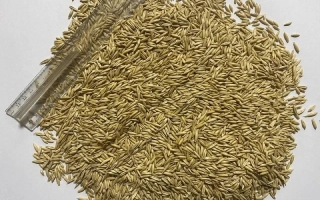
TARSKIY 2 is a mid-season spring oat (Avena sativa L.) variety intended for food and feed purposes. It is characterized by large grains with a 1000-grain weight ranging from 36.6 to 54 grams, white with a distinct creamy hue, intermediate between letevite and long-hull types. The variety belongs to the mutica type, featuring a thick pericarp with a hulling rate of about 27.9%, ensuring a combinati…
Ripeness Group (days)
Medium-maturing (95-110)
Yield
60+
Disease Resistance
Rust, Mottling
Mass of 1000 seeds (g)
36-40
Description
TARSKIY 2 is a mid-season spring oat (Avena sativa L.) variety intended for food and feed purposes. It is characterized by large grains with a 1000-grain weight ranging from 36.6 to 54 grams, white with a distinct creamy hue, intermediate between letevite and long-hull types. The variety belongs to the mutica type, featuring a thick pericarp with a hulling rate of about 27.9%, ensuring a combination of grain size and enhanced grain quality. The vegetative period ranges from 66 to 90 days; the variety matures 1-2 days earlier than standard varieties, allowing for harvest within optimal timeframes. The plant is of medium height—the culm reaches 78-100 cm—with a sturdy structure and medium resistance to lodging. The plant is erect, with weakly hairy leaf sheaths. The panicle is semi-closed, two-sided, and semi-erect, which promotes good ventilation and reduces disease risk. TARSKIY 2 is distinguished by its low-maintenance nature and enhanced drought resistance, making it suitable for sub-taiga, northern forest-steppe, taiga, and forest-steppe zones, including the Omsk and Yaroslavl regions. The variety demonstrates high yield—the maximum recorded yield is 5.52 t/ha. The grain contains approximately 10.4-15.6% protein, 3.32% fat, and 42.6% starch, making it attractive to the food industry. Grain natural density varies from 440 to 550 g/l. Despite high performance indicators, the variety is susceptible to certain diseases, such as crown rust, red-brown spot, and powdery bunt, which requires attention in agronomic practices.
Crop & resistance
Crop
Disease resistance
Specifications hover over for a hint about the specification
| Ripeness Group (days) | Medium-maturing (95-110) |
|---|---|
|
Yield
Yield
Overall bulb harvest per unit area. Depends on both onion variety characteristics and agronomic practices, fertilizers, and irrigation. Under optimal growing conditions, an onion yield of 100 tons per hectare and above is not considered record-breaking. |
60+ |
| Disease Resistance | |
| Mass of 1000 seeds (g) | 36-40 |
| Protein (%) | 10-11 |
| Plant Height | 90-100 |
| Grain-oriented | |
| Corn Color | |
| Usage Type | |
| Registration year | 2001 |
| Catalog | Catalog → Oats |
| Legal data |
Show · 2
|
| Country | Russia |
Store offers
Prices are updated on loadLoading offers…
Aggregator catalog: prices are collected automatically from store websites, normalized by AI and converted at the current exchange rate. Before ordering, confirm the price and availability on the store's website. This block is not indexed by search engines — the data is loaded after the page opens.
Not yet комментариев. Be the first!


See also
Often considered together with this variety




Recently viewed
Products you’ve viewed on this site
Reviews · 0