


SKU #69190
·
57 views
KRASNOKUTSKY 36
Chickpea
Federal Agrarian Scientific Center of the South-EastUser rating
0 votes0% positive reviews
No ratings yet — be the first.
Seed shape
Intermediate
Seed Color
Yellow, Beige
Weight of 1000 seeds, g
250-300
Disease Resistance
Average, Ascochytosis, Fusarium
Store offers · 1 from 1 stores
Prices are updated on loadLoading offers…
Available at: Agroveles
Aggregator catalog: prices are collected automatically from store websites, normalized by AI and converted at the current exchange rate. Before ordering, confirm the price and availability on the store's website. This block is not indexed by search engines — the data is loaded after the page opens.
About product

KRASNOKUTSKY 36 is a chickpea variety developed at the Krasnokutskaya Breeding and Experimental Station of the Southern Science Agriculture Center of the South-East. This medium-maturing variety is characterized by a vegetative period of 75-90 days and belongs to the Transcaucasico-Carneum type. The plants have a compact bush form, 45-75 cm tall, with the lower pods attached high up at 22-30 cm, w…
Seed shape
Intermediate
Seed Color
Yellow, Beige
Weight of 1000 seeds, g
250-300
Disease Resistance
Average, Ascochytosis, Fusarium
Description
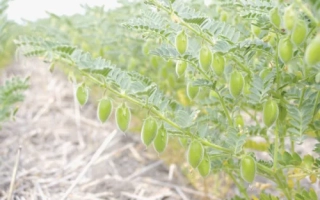
KRASNOKUTSKY 36 is a chickpea variety developed at the Krasnokutskaya Breeding and Experimental Station of the Southern Science Agriculture Center of the South-East. This medium-maturing variety is characterized by a vegetative period of 75-90 days and belongs to the Transcaucasico-Carneum type. The plants have a compact bush form, 45-75 cm tall, with the lower pods attached high up at 22-30 cm, which facilitates harvesting with conventional grain combines. The pods are straw-yellow, inflated, and the seeds are yellow-pink or beige, intermediate in shape, closer to round, with a 1000-seed mass of 280-300 grams.
The variety is distinguished by high resistance to drought and dry winds, as well as resistance to lodging and shattering, which ensures yield stability. It is moderately resistant to ascohitosis and fusarium and is not damaged by pea weevils. Thanks to these qualities, KRASNOKUTSKY 36 demonstrates high productivity: in the Volga region, yields reach 18-20 centners/ha, and in favorable years at the Pugachev variety trial plot in the Saratov region—35-39 centners/ha, which is 1.5 times higher than spring wheat yields.
In addition to high yields, the variety has excellent market and culinary qualities, making it in demand for food use. Thanks to symbiosis with nitrogen-fixing bacteria, plants absorb nitrogen from the air, enriching the soil and reducing the need for nitrogen fertilizers, which is equivalent to applying 1.5 centners of nitrogen fertilizers per hectare. To increase yields, it is recommended to simultaneously apply phosphorus fertilizers at a dose of 10-15 kg/ha of active substance. High productivity and variety stability ensure stable grain sales and net income per hectare.
The variety is distinguished by high resistance to drought and dry winds, as well as resistance to lodging and shattering, which ensures yield stability. It is moderately resistant to ascohitosis and fusarium and is not damaged by pea weevils. Thanks to these qualities, KRASNOKUTSKY 36 demonstrates high productivity: in the Volga region, yields reach 18-20 centners/ha, and in favorable years at the Pugachev variety trial plot in the Saratov region—35-39 centners/ha, which is 1.5 times higher than spring wheat yields.
In addition to high yields, the variety has excellent market and culinary qualities, making it in demand for food use. Thanks to symbiosis with nitrogen-fixing bacteria, plants absorb nitrogen from the air, enriching the soil and reducing the need for nitrogen fertilizers, which is equivalent to applying 1.5 centners of nitrogen fertilizers per hectare. To increase yields, it is recommended to simultaneously apply phosphorus fertilizers at a dose of 10-15 kg/ha of active substance. High productivity and variety stability ensure stable grain sales and net income per hectare.
Crop & resistance
Disease resistance
Pest resistance
Specifications
Not yet комментариев. Be the first!





See also
Often considered together with this variety




Recently viewed
Products you’ve viewed on this site
Reviews · 0