


SKU #69177
·
57 views
Vega
Chickpea
Federal Agrarian Scientific Center of the South-EastUser rating
0 votes0% positive reviews
No ratings yet — be the first.
Seed shape
Pea-shaped
Seed Color
Yellow
Weight of 1000 seeds, g
250-300
Ripening Period
85-95
About product

A reliable mid-early variety with high disease resistance and excellent yield potential for food processing.
Seed shape
Pea-shaped
Seed Color
Yellow
Weight of 1000 seeds, g
250-300
Ripening Period
85-95
Description
Stable chickpea yields in challenging climatic conditions
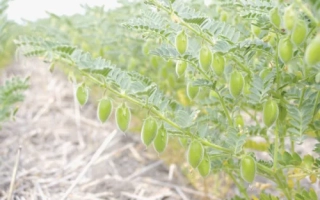
The Vega chickpea variety is a product of long-term breeding efforts by the Federal Agrarian Scientific Center of the South-East (FANTS Yugo-Vostoka), specifically designed for farms looking to balance profitability with high crop reliability. In modern agriculture, where pathogens are a major limiting factor, this variety stands out due to its genetic resistance to Fusarium and Ascochyta blight, significantly reducing the need for expensive fungicide applications.
Biological potential and specifications
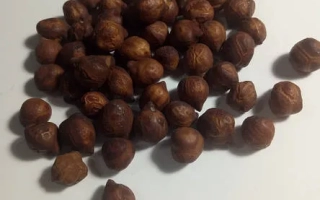
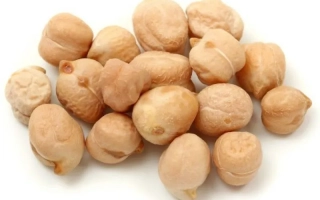
This variety is classified as mid-early, with a growing season ranging from 85 to 95 days. Such early maturity allows Vega to escape the peak summer droughts common in the South-East regions. The pea-like shape of the seeds and their rich yellow color make the product highly desirable for the food processing industry.
- 1000-seed weight: 250–300 grams (large seed size meets market standards for the food sector).
- Protein content: 18% to 24%, making it suitable for both fodder and high-value food processing.
- Productivity: Potential yield of 1.5–2.0 tons per hectare, which is an excellent result for rain-fed farming.
Breeding by FANTS Yugo-Vostoka, in collaboration with the farm enterprise of V.V. Kortel, has resulted in a resilient variety that adapts well to temperature fluctuations and moisture stress. Due to its agronomic flexibility, Vega remains a sought-after solution for producers prioritizing food security and high-quality legume raw materials.
Crop & resistance
Disease resistance
Specifications hover over for a hint about the specification
| Seed shape | |
|---|---|
| Seed Color | |
| Weight of 1000 seeds, g | 250-300 |
|
Ripening Period
Ripening Period
It takes 70-100 days until pepper reaches flowering stage, 130-160 days until technical fruit ripeness, and 135-180 days until physiological ripeness. |
85-95 |
| Protein content, % | 18-20, 20-22, 22-24 |
| Potential Yield | 1.5-2.0 |
| Growing Season | 85-95 |
| Assignment | |
| Registration year | 2019 |
| Catalog | Catalog → Chickpea |
| Manufacturer | Federal Agrarian Scientific Center of the South-East |
| Legal data |
Show · 2
|
| Country | Russia |
Store offers
Prices are updated on loadLoading offers…
Aggregator catalog: prices are collected automatically from store websites, normalized by AI and converted at the current exchange rate. Before ordering, confirm the price and availability on the store's website. This block is not indexed by search engines — the data is loaded after the page opens.
Not yet комментариев. Be the first!






See also
Often considered together with this variety






Recently viewed
Products you’ve viewed on this site
Reviews · 0