


SKU #46720
·
75 views
Millet Askoldo
Millet
Prices in stores
No offers yet — stores have not added prices for this product yet.
Similar varieties with prices
-
Kozatske
from 0.55 €per 1 kg
-
 Polyano
from 0.55 €per 1 kg
Polyano
from 0.55 €per 1 kg
-
 Kazachye
from 553.62 €
Kazachye
from 553.62 €
-
 Veselka
from 79.5 €per 1 kg
Veselka
from 79.5 €per 1 kg
Type of Variety
Variety
Registration year
2011
Your mark
0 votes
0% positive ratings
Description
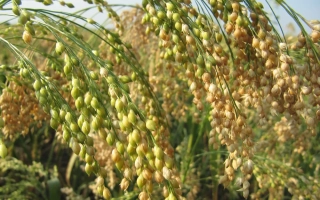
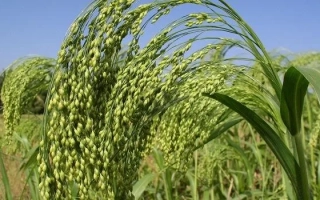
Askoldo — a sorghum variety developed by individual selection based on crossing the varieties "Mironovskoe 51" and "Veselopolyansko 176". It is a medium-maturing variety with a ripening period of 80-90 days, characterized by high potential yield of 5.0-6.0 t/ha. Plants reach a height of 95-105 cm, have compact, strongly drooping panicles 35-38 cm long, well-branched. Grains are large, yellow with a bright yellow kernel, protein content is 13.5%. The 1000-seed mass varies from 8.0 to 8.3 g, grain moisture content is within 16.3-18.2%, and milling yield reaches 78-81%. The variety is resistant to lodging, bacterial diseases, and pests, belongs to the aurum variety, and is intended for cultivation in the Forest-Steppe ecological zone. Askoldo is recommended for cultivation in the Forest-Steppe, Polissia, and Steppe zones. This sorghum variety is a warm-loving, drought-resistant, and light-loving plant capable of germinating at temperatures not lower than +8-10°C. It effectively utilizes summer precipitation due to the possibility of late sowing. Sorghum is widely used as a grain crop for food purposes, as well as as a green manure crop, serving as a natural and effective fertilizer, improving soil structure and increasing its fertility. Due to its high yield and resistance to adverse conditions, the Askoldo variety is often used as a safety crop for reseeding winter-killed and early spring crops, as well as for green feed sowing. For successful cultivation of Askoldo, clean weed-free structured soils with high content of readily soluble nutrients, such as chernozems, chestnut soils, and gray forest soils with pH 5.5-7.5, are required. The variety has high requirements for preceding crops: best are cereals, legumes, potatoes, sugar beets, perennial grasses, and cucurbits. Poor predecessors are sorghum, sudangrass, sunflower, spring barley, and sudangrass. Soil preparation should focus on thorough weed control, especially during the period from tillering to early growth, when plant growth slows down and they are vulnerable to competition.
Crop & resistance
Disease resistance
Specifications
| Type of Variety | |
|---|---|
| Registration year | 2011 |
| Catalog | Catalog → Millet |
| Legal data |
Show · 1
|
| Country | Ukraine |
No reviews yet. Be the first to share your experience.




See also
Often considered together with this variety




Recently viewed
Products you’ve viewed on this site
Reviews