


SKU #46742
·
60 views
Special
Millet
User rating
0 votes0% positive reviews
No ratings yet — be the first.
Type of Sort
Spring wheat
Registration year
2019
About product

A reliable spring variety with genetic resistance to stem smut and excellent harvesting efficiency.
Type of Sort
Spring wheat
Registration year
2019
Description
Stable millet yields in Ukrainian conditions
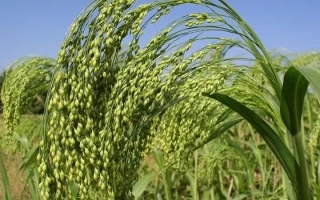
The "Osoblyve" variety, developed by the V. Ya. Yuriev Plant Production Institute, is a high-tech solution for farms focused on minimizing risks in spring millet cultivation. The variety's main specialization is producing stable commercial grain in regions with moderate moisture levels.
Resistance to stem smut
A key practical argument for choosing "Osoblyve" is its high genetic resistance to stem smut. In areas with high infection pressure, this allows farmers to reduce the intensity of fungicide applications, thereby lowering production costs per hectare without sacrificing crop quality.
Agronomic value in crop rotation
- Type: spring variety with a short growing season, making it effective as a catch crop or for late sowing schemes.
- Adaptability: well-suited to the soil and climatic conditions of the Ukrainian Steppe and Forest-Steppe zones.
- Efficiency: uniform ripening simplifies combine harvester settings and reduces losses during direct harvesting.
Agronomists select this variety to achieve consistent grain yields that are predictable for market sale and do not require expensive, specialized cultivation techniques. "Osoblyve" is a classic choice for farms that value the purity of the seed fund and the reliability of domestic selection against major crop pathogens.
Crop & resistance
Disease resistance
Specifications
| Type of Sort | |
|---|---|
| Registration year | 2019 |
| Catalog | Catalog → Millet |
| Legal data |
Show · 1
|
| Country | Ukraine |
Store offers
Prices are updated on loadLoading offers…
Aggregator catalog: prices are collected automatically from store websites, normalized by AI and converted at the current exchange rate. Before ordering, confirm the price and availability on the store's website. This block is not indexed by search engines — the data is loaded after the page opens.
Not yet комментариев. Be the first!





See also
Often considered together with this variety




Recently viewed
Products you’ve viewed on this site
Reviews · 0