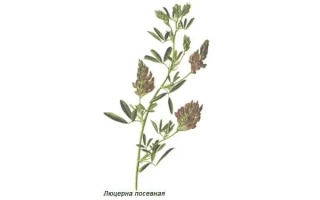
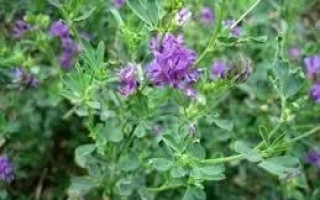
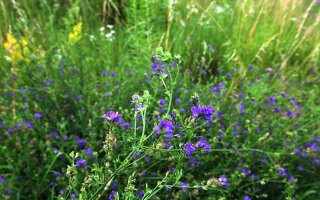
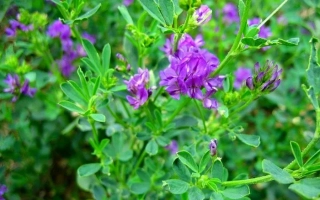
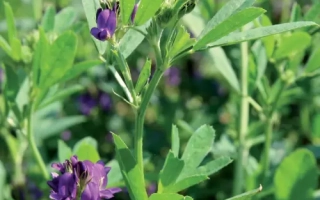
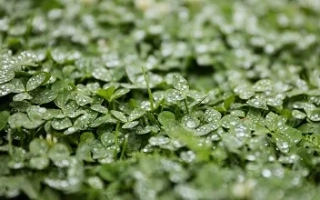
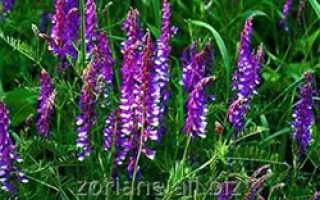
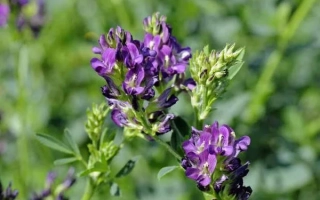
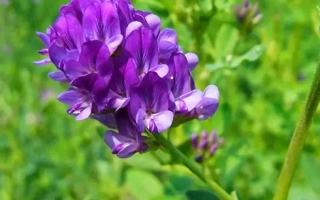
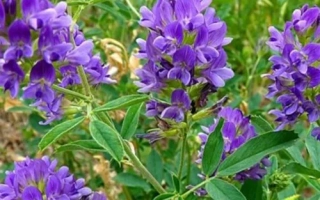
Lucerne variety Zoryana belongs to the species Medicago sativa L. and is a medium-maturing, tall plant with high winter hardiness and plasticity. This variety is characterized by good spring and autumn regrowth, as well as high nitrogen-fixing ability, which contributes to soil fertility improvement. The plant has an upright rosette and bush, moderate leafiness, and flower corolla color ranging from light to dark purple. Seeds are yellow, club-shaped, and pods are brown, medium-sized, with 1.5 to 3.5 twists.
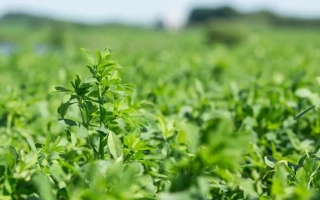
The yield of lucerne Zoryana ranges from 463 to 680 centners per hectare of green mass, 103-147 centners per hectare of dry matter, and 3.9-5.9 centners per hectare of seeds. Nitrogen-fixing activity reaches 2344 nmol/plant.hour, making this variety especially valuable for soil restoration and structure improvement. Thanks to its deep root system and resistance to frost and drought, lucerne thrives under various climatic conditions and can produce several yields per season.
Lucerne Zoryana is widely used as a forage crop for livestock grazing and green feed and hay production. It is rich in protein and vitamins, making it an important component of animal feed rations. Additionally, growing this variety promotes humus accumulation in the soil and improves its structure, positively affecting subsequent crops.