


SKU #70121
·
54 views
Selena
Honeysuckle
FANCAUser rating
0 votes0% positive reviews
No ratings yet — be the first.
Berry Weight
1.0–1.5
Flavor
Sour-sweet
Yield (kg per plant)
3.0–4.0
Bush height, cm
1.5–2.0
Prices in stores
from2.62 €per seedling
pack from 2.62 € per 1 pcs
2 offers from 2 stores
Store offers · 2 from 2 stores
Prices are updated on loadLoading offers…
Available at: Fitosad · Fitosad · Наша Дача · TataSad
Aggregator catalog: prices are collected automatically from store websites, normalized by AI and converted at the current exchange rate. Before ordering, confirm the price and availability on the store's website. This block is not indexed by search engines — the data is loaded after the page opens.
About product

Lonicera "Selena" is a variety bred at the Research Institute of Horticulture (NIISS) in Barnaul, distinguished by high yield and resistance to adverse conditions. Bushes are strong-growing (up to 1.9 m), spreading, with medium-thickness shoots and drooping tops. Leaves are large, dark green, elliptical, providing good photosynthesis and pest protection.The fruits of the "Selena" variety are large…
Berry Weight
1.0–1.5
Flavor
Sour-sweet
Yield (kg per plant)
3.0–4.0
Bush height, cm
1.5–2.0
Description
Lonicera "Selena" is a variety bred at the Research Institute of Horticulture (NIISS) in Barnaul, distinguished by high yield and resistance to adverse conditions. Bushes are strong-growing (up to 1.9 m), spreading, with medium-thickness shoots and drooping tops. Leaves are large, dark green, elliptical, providing good photosynthesis and pest protection.
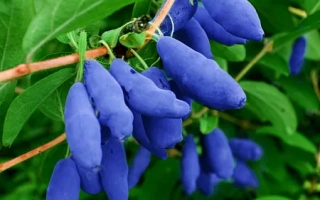
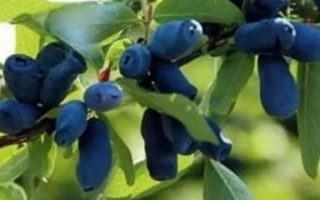
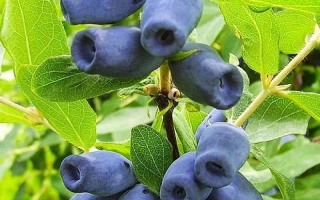
The fruits of the "Selena" variety are large (1.0–1.4 g), almost black with a blue bloom, and have an elliptical shape with a blunt-tapered end. The taste is sweet-sour with a slight bitterness, rated 3.8 points. Fruits do not drop and retain juiciness until harvest. Ripening period is early to mid-June, with a yield of about 3.5 kg per bush (≈ 8.8 t/ha with a planting scheme of 4 × 1). Bushes bear fruit starting from the second year after planting.
The variety is drought-resistant, highly winter-hardy, and resistant to pests and diseases. "Selena" is self-sterile, but for more stable fruiting, cross-pollination with varieties such as Zolushka or Ognenny Opal is recommended. Main advantages – high yield, large fruits, no fruit drop, and resistance to adverse conditions; the only drawback is slight bitterness in fruits.
The fruits of the "Selena" variety are large (1.0–1.4 g), almost black with a blue bloom, and have an elliptical shape with a blunt-tapered end. The taste is sweet-sour with a slight bitterness, rated 3.8 points. Fruits do not drop and retain juiciness until harvest. Ripening period is early to mid-June, with a yield of about 3.5 kg per bush (≈ 8.8 t/ha with a planting scheme of 4 × 1). Bushes bear fruit starting from the second year after planting.
The variety is drought-resistant, highly winter-hardy, and resistant to pests and diseases. "Selena" is self-sterile, but for more stable fruiting, cross-pollination with varieties such as Zolushka or Ognenny Opal is recommended. Main advantages – high yield, large fruits, no fruit drop, and resistance to adverse conditions; the only drawback is slight bitterness in fruits.
Crop & resistance
Crop
Specifications
| Berry Weight | 1.0–1.5 |
|---|---|
| Flavor | |
| Yield (kg per plant) | 3.0–4.0 |
| Bush height, cm | 1.5–2.0 |
| Registration year | 2000 |
| Catalog | Catalog → Honeysuckle |
| Manufacturer | FANCA |
| Legal data |
Show · 1
|
| Country | Russia |
Not yet комментариев. Be the first!
Alternatives
Honeysuckle saplings · similar varieties





See also
Often considered together with this variety



Recently viewed
Products you’ve viewed on this site
Reviews · 0