


SKU #62011
·
48 views
SEVERNY
Grape
FRSCUser rating
0 votes0% positive reviews
No ratings yet — be the first.
Usage Group
Technical
Ripening Period
Medium
Cold Resistance
High (up to -24°C)
Resistance to Mildew
Average
About product

Severny is a technical grape variety bred in 1947 at the Y.I. Potapenko All-Russian Grape and Wine Research Institute by pollinating the Severny variety with a mixture of pollen from Muscat of Alexandria, Muscat Blanc, and Muscat de Hongrie. This variety belongs to wine varieties with medium ripening; technical berry ripeness occurs in early September, and the harvest is usually conducted from lat…
Usage Group
Technical
Ripening Period
Medium
Cold Resistance
High (up to -24°C)
Resistance to Mildew
Average
Description
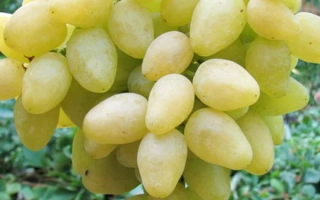
Severny is a technical grape variety bred in 1947 at the Y.I. Potapenko All-Russian Grape and Wine Research Institute by pollinating the Severny variety with a mixture of pollen from Muscat of Alexandria, Muscat Blanc, and Muscat de Hongrie. This variety belongs to wine varieties with medium ripening; technical berry ripeness occurs in early September, and the harvest is usually conducted from late September to mid-October. Bunches have medium size, cylinder-cone shape, and medium density; berries are round, white, and medium-sized. Bushes are medium-sized, vigorous in youth, with one-year-old canes that mature to 52.7-73.8%.
Severny is distinguished by enhanced resistance to diseases and frosts, making it particularly valuable for cultivation in the southern zone of covered viticulture. Frost hardiness allows preserving up to 61.9% of healthy buds at temperatures down to -23°C, and up to -26°C on the soil surface. Berry infection by downy mildew reaches no more than 10%, and by gray rot—up to 20%. Sugar content in berry juice varies from 16.7 to 22%, acidity from 8 to 11.3 g/l, ensuring high-quality raw material for winemaking.
The variety is recommended for producing various types of wines—white table, dessert, strong, and sparkling—as well as for making juices and cognacs. Training bushes in the form of a high-stem double-arm cordone with drooping one-year-old growth allows obtaining high yields with minimal labor and material costs. However, the variety is prone to overloading with fruit, so strict control of bud loading is necessary to maintain quality and yield stability.
Severny is distinguished by enhanced resistance to diseases and frosts, making it particularly valuable for cultivation in the southern zone of covered viticulture. Frost hardiness allows preserving up to 61.9% of healthy buds at temperatures down to -23°C, and up to -26°C on the soil surface. Berry infection by downy mildew reaches no more than 10%, and by gray rot—up to 20%. Sugar content in berry juice varies from 16.7 to 22%, acidity from 8 to 11.3 g/l, ensuring high-quality raw material for winemaking.
The variety is recommended for producing various types of wines—white table, dessert, strong, and sparkling—as well as for making juices and cognacs. Training bushes in the form of a high-stem double-arm cordone with drooping one-year-old growth allows obtaining high yields with minimal labor and material costs. However, the variety is prone to overloading with fruit, so strict control of bud loading is necessary to maintain quality and yield stability.
Crop & resistance
Crop
Disease resistance
Specifications hover over for a hint about the specification
| Usage Group | |
|---|---|
|
Ripening Period
Ripening Period
It takes 70-100 days until pepper reaches flowering stage, 130-160 days until technical fruit ripeness, and 135-180 days until physiological ripeness. |
Medium |
| Cold Resistance | |
| Resistance to Mildew | |
| Resistance to Gray Mold | |
|
Yield
Yield
Overall bulb harvest per unit area. Depends on both onion variety characteristics and agronomic practices, fertilizers, and irrigation. Under optimal growing conditions, an onion yield of 100 tons per hectare and above is not considered record-breaking. |
High |
| Bush Growth Power | |
| Bunch Size | Medium (300–500 g) |
| Berry Size | Medium (2–5 g) |
| Berry Color | |
| Flavor | |
| Sugar Content | Average (16–20%) |
| Zoning | |
| Care Requirement | |
| Assignment | |
| Features | |
| Registration year | 1974 |
| Catalog | Catalog → Grape |
| Manufacturer | FRSC |
| Legal data |
Show · 1 |
| Country | Russia |
Store offers
Prices are updated on loadLoading offers…
Aggregator catalog: prices are collected automatically from store websites, normalized by AI and converted at the current exchange rate. Before ordering, confirm the price and availability on the store's website. This block is not indexed by search engines — the data is loaded after the page opens.
Not yet комментариев. Be the first!
Alternatives
Grapevine saplings · similar varieties


EXPECTED
Фгбоу Во Кубанский Государственный Аграрный Университет Имени И.Т.Трубилина
049 10 offers
2.58 €per seedling ≈ 133 ₴


See also
Often considered together with this variety


Recently viewed
Products you’ve viewed on this site
Reviews · 0