


Prices in stores
from3.08 €per seedling
pack from 1.96 € per pack
4 offers from 4 stores
Usage Group
Wine
Ripening Period
Early
Frost Resistance
High (up to -24°C)
Resistance to Mildew
High
Your mark
0 votes
0% positive ratings
Store offers · 4 from 4 stores
4 offers in 4 stores — from 3.08 € per seedling.
Available at: Добродар · LeafLand · Sadovnikoff · Vino
Prices are collected automatically from store websites and converted at the current exchange rate. Check the price and availability on the store website before ordering.
Description
The Oleg grape variety is an early technical variety bred in Ukraine based on the legacy of P.Ya. Golodryga. The parents of the variety are hybrids of Podarok Magarach and Traminer Pink. Bunches are characterized by medium vigor and good vine ripening, while suckers form in minimal quantities. Leaves are of medium size, three- or five-lobed, with a characteristic petiole notch shape and weak pubescence along the veins. The flower is bisexual, which promotes stable fruiting.
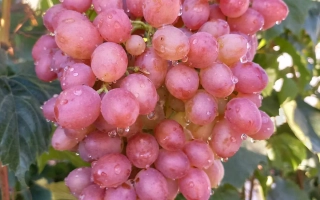
Bunches have a cylindrical shape, are dense, and weigh approximately 180-220 grams on average. Berries are of medium size, round, grayish-pink in color with an intense waxy bloom (pruin). The skin is thin but tough, while the flesh is fleshy and juicy. The berry taste is pleasant, with a distinctly expressed varietal aroma of muscat and Kazanlyk rose, which imparts special elegance to the wine. Juice sugar content reaches 22-26%, while acidity ranges from 5-7 g/l, ensuring high-quality raw materials for the production of dessert wines.
The variety is distinguished by high yields—up to 100 centners per hectare with an optimal load of up to 40 buds per bush. It possesses resistance to major fungal diseases such as downy mildew, powdery mildew, and gray mold, while requiring preventive fungicide treatments. Additionally, the variety demonstrates increased resistance to phylloxera and frost, although covering is recommended for cultivation in areas with harsh winters. Oleg grapes are widely used for producing high-quality dessert wines that, in terms of organoleptic properties, resemble wines made from Traminer Pink grapes.
Bunches have a cylindrical shape, are dense, and weigh approximately 180-220 grams on average. Berries are of medium size, round, grayish-pink in color with an intense waxy bloom (pruin). The skin is thin but tough, while the flesh is fleshy and juicy. The berry taste is pleasant, with a distinctly expressed varietal aroma of muscat and Kazanlyk rose, which imparts special elegance to the wine. Juice sugar content reaches 22-26%, while acidity ranges from 5-7 g/l, ensuring high-quality raw materials for the production of dessert wines.
The variety is distinguished by high yields—up to 100 centners per hectare with an optimal load of up to 40 buds per bush. It possesses resistance to major fungal diseases such as downy mildew, powdery mildew, and gray mold, while requiring preventive fungicide treatments. Additionally, the variety demonstrates increased resistance to phylloxera and frost, although covering is recommended for cultivation in areas with harsh winters. Oleg grapes are widely used for producing high-quality dessert wines that, in terms of organoleptic properties, resemble wines made from Traminer Pink grapes.
Crop & resistance
Crop
Disease resistance
Pest resistance
Specifications
| Usage Group | |
|---|---|
| Ripening Period | Early |
| Frost Resistance | |
| Resistance to Mildew | |
| Resistance to oidium | |
| Resistance to Gray Mold | |
| Yield | High |
| Bush Growth Power | |
| Flower Type | |
| Bunch Size | Medium (300–500 g) |
| Berry Size | Medium (2–5 g) |
| Berry Color | |
| Flavor | |
| Sugar Content | High (>20%) |
| Zoning | |
| Care Requirement | |
| Purpose | |
| Features | |
| Registration year | 2017 |
| Catalog | Catalog → Grape |
| Manufacturer | NVF Ampelos |
| Legal data |
Show · 7
|
| Country | Ukraine |
No reviews yet. Be the first to share your experience.
Alternatives
Grapevine saplings · similar varieties


TEACHER'S MEMORY
Omsk State Agrarian University named after P.A. Stolypin
063 15 offers
2.61 €per seedling ≈ 133 ₴

See also
Often considered together with this variety




Recently viewed
Products you’ve viewed on this site
Reviews