


SKU #62153
·
57 views
MUGOFIR
Grape
FRSCUser rating
0 votes0% positive reviews
No ratings yet — be the first.
Usage Group
Technical
Ripening Period
Early
Cold Resistance
High (up to -24°C)
Resistance to Mildew
High
About product

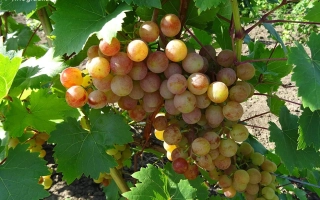
Mugofir is a red technical grape variety created by crossing the Muscat Golodriha and Violet Early varieties through the selection of the All-Russian Research Institute of Viticulture and Winemaking (VNIIViV). The variety is characterized by early ripening, occurring in late August to early September, with a fruiting period lasting about 125 days. The bunches of Mugofir are of medium size, cylinde…
Usage Group
Technical
Ripening Period
Early
Cold Resistance
High (up to -24°C)
Resistance to Mildew
High
Description
Mugofir is a red technical grape variety created by crossing the Muscat Golodriha and Violet Early varieties through the selection of the All-Russian Research Institute of Viticulture and Winemaking (VNIIViV). The variety is characterized by early ripening, occurring in late August to early September, with a fruiting period lasting about 125 days. The bunches of Mugofir are of medium size, cylinder-cone shaped, and of medium density, with bunch weight varying from 150 to 400 grams. Berries are of medium size, round or slightly oval, dark red-purple in color with medium-thickness skin. The flesh is juicy and fleshy, with a harmonious muscat flavor, and the juice is colorless or pale pink. The berries contain 21.7 to 24 g of sugar per 100 cm3 and titratable acidity ranging from 4.3 to 7 g/dm3. Mugofir bushes are of medium height with good shoot ripening and medium growth vigor. Leaves are five-lobed, of medium size with very weak cobwebby pubescence. The variety boasts high yield, up to 179 c/ha with an optimal planting scheme. About 65-75% of shoots are fruit-bearing, with a fruiting coefficient and fruitfulness coefficient of 1.2 and 1.4, respectively. Mugofir is frost-resistant up to -25 to -26 °C, allowing it to be grown in non-covered culture. At the same time, the variety demonstrates high winter hardiness and retains a significant portion of opened buds after sharp temperature fluctuations. Mugofir differs in high resistance to fungal diseases, including downy mildew, powdery mildew, and gray rot, with resistance ratings from 2 to 3 points. The variety is recommended for the production of dry and special muscat wines, as well as semi-dessert wines with a pronounced muscat aroma. Wines from this variety are obtained as clear, pale ruby red in color with a tea rose aroma and harmonious taste. Due to its characteristics and resistance, Mugofir is a promising alternative to the Violet Early variety and pairs well with rootstock varieties.
Crop & resistance
Crop
Disease resistance
Specifications hover over for a hint about the specification
| Usage Group | |
|---|---|
|
Ripening Period
Ripening Period
It takes 70-100 days until pepper reaches flowering stage, 130-160 days until technical fruit ripeness, and 135-180 days until physiological ripeness. |
Early |
| Cold Resistance | |
| Resistance to Mildew | |
| Resistance to oidium | |
| Resistance to Gray Mold | |
|
Yield
Yield
Overall bulb harvest per unit area. Depends on both onion variety characteristics and agronomic practices, fertilizers, and irrigation. Under optimal growing conditions, an onion yield of 100 tons per hectare and above is not considered record-breaking. |
High |
| Bush Growth Power | |
| Bunch Size | Medium (300–500 g) |
| Berry Size | Medium (2–5 g) |
| Berry Color | |
| Flavor | |
| Sugar Content | High (>20%) |
| Zoning | |
| Assignment | |
| Registration year | 2021 |
| Catalog | Catalog → Grape |
| Manufacturer | FRSC |
| Legal data |
Show · 1 |
| Country | Russia |
Store offers
Prices are updated on loadLoading offers…
Aggregator catalog: prices are collected automatically from store websites, normalized by AI and converted at the current exchange rate. Before ordering, confirm the price and availability on the store's website. This block is not indexed by search engines — the data is loaded after the page opens.
Not yet комментариев. Be the first!
Alternatives
Grapevine saplings · similar varieties


See also
Often considered together with this variety




Recently viewed
Products you’ve viewed on this site
Reviews · 0