


SKU #62172
·
68 views
Grape Valentina
Grape
FRSCUser rating
0 votes0% positive reviews
No ratings yet — be the first.
Usage Group
Dining
Ripening Period
Medium
Cold Resistance
High (up to -24°C)
Resistance to Mildew
High
Prices in stores
from1.83 €per seedling
pack from 2.02 € per 1 pcs
4 offers from 3 stores
Store offers · 4 from 3 stores
Prices are updated on loadLoading offers…
Available at: DREVO · LeafLand · Posadka · Sezon
Aggregator catalog: prices are collected automatically from store websites, normalized by AI and converted at the current exchange rate. Before ordering, confirm the price and availability on the store's website. This block is not indexed by search engines — the data is loaded after the page opens.
About product

The Valentina grape variety is a table variety of medium ripening period, ripening within 125-140 days. This hybrid was bred at the Y.I. Potapenko All-Russian Research Institute of Viticulture and Viniculture (VNIIViV) as a result of crossing the Demetra and Summer Muscat varieties. The bushes are strongly vigorous with bisexual flowers, which promotes good fruit set. The clusters are very large,…
Usage Group
Dining
Ripening Period
Medium
Cold Resistance
High (up to -24°C)
Resistance to Mildew
High
Description
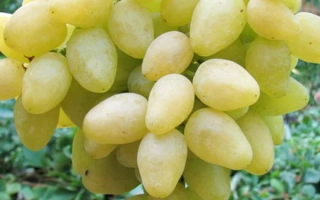
The Valentina grape variety is a table variety of medium ripening period, ripening within 125-140 days. This hybrid was bred at the Y.I. Potapenko All-Russian Research Institute of Viticulture and Viniculture (VNIIViV) as a result of crossing the Demetra and Summer Muscat varieties. The bushes are strongly vigorous with bisexual flowers, which promotes good fruit set. The clusters are very large, cylindrical and elongated, weighing from 1000 to 2000 grams, of medium density and loose. The berries are large, elongated, weighing 12-15 grams, having a beautiful golden-yellow color, which on the sunny side becomes bright amber-yellow with brown spots.
The berry pulp is fleshy and very tender, with a pleasant musky aroma and a sage aftertaste. The skin is thin and practically not felt when consumed. Sugar accumulation in the berries reaches 16-19%, while the acidity of the juice is 5-6 g/l, which gives the wine and table berries a balanced taste with increased acidity. The variety is distinguished by good transportability, which allows maintaining the quality of the berries during transport.
Valentina grape has high resistance to diseases: the variety is resistant to downy mildew, moderately resistant to powdery mildew and resistant to gray rot. Frost resistance of the variety reaches -24°C, which allows growing it in covered or semi-covered culture. The percentage of fruiting shoots is 60-75%, which ensures stable and high yield. Due to its characteristics and taste qualities, the Valentina variety is an excellent choice for growing both in amateur and professional vineyards.
The berry pulp is fleshy and very tender, with a pleasant musky aroma and a sage aftertaste. The skin is thin and practically not felt when consumed. Sugar accumulation in the berries reaches 16-19%, while the acidity of the juice is 5-6 g/l, which gives the wine and table berries a balanced taste with increased acidity. The variety is distinguished by good transportability, which allows maintaining the quality of the berries during transport.
Valentina grape has high resistance to diseases: the variety is resistant to downy mildew, moderately resistant to powdery mildew and resistant to gray rot. Frost resistance of the variety reaches -24°C, which allows growing it in covered or semi-covered culture. The percentage of fruiting shoots is 60-75%, which ensures stable and high yield. Due to its characteristics and taste qualities, the Valentina variety is an excellent choice for growing both in amateur and professional vineyards.
Video · 7 videos
Suggest a video →Crop & resistance
Crop
Disease resistance
Specifications hover over for a hint about the specification
| Usage Group | |
|---|---|
|
Ripening Period
Ripening Period
It takes 70-100 days until pepper reaches flowering stage, 130-160 days until technical fruit ripeness, and 135-180 days until physiological ripeness. |
Medium |
| Cold Resistance | |
| Resistance to Mildew | |
| Resistance to oidium | |
| Resistance to Gray Mold | |
|
Yield
Yield
Overall bulb harvest per unit area. Depends on both onion variety characteristics and agronomic practices, fertilizers, and irrigation. Under optimal growing conditions, an onion yield of 100 tons per hectare and above is not considered record-breaking. |
High |
| Bush Growth Power | |
| Flower Type | |
| Bunch Size | Very large (from 800 g) |
| Berry Size | Large (5–8 g) |
| Berry Color | |
| Flavor | |
| Sugar Content | Average (16–20%) |
| Zoning | |
| Assignment | |
| Features | |
| Registration year | 2024 |
| Catalog | Catalog → Grape |
| Manufacturer | FRSC |
| Legal data |
Show · 1 |
| Country | Russia |
Not yet комментариев. Be the first!
Alternatives
Grapevine saplings · similar varieties


TEACHER'S MEMORY
ФГБОУ ВО Омский государственный аграрный университет имени П.А. Столыпина
063 8 offers
2.61 €per seedling ≈ 134 ₴

Helios
Фгбоу Во Кубанский Государственный Аграрный Университет Имени И.Т.Трубилина
052 6 offers
0.54 €per seedling ≈ 28 ₴

EXPECTED
Фгбоу Во Кубанский Государственный Аграрный Университет Имени И.Т.Трубилина
049 10 offers
2.58 €per seedling ≈ 132 ₴

ROSHFOR K
Фгбоу Во Кубанский Государственный Аграрный Университет Имени И.Т.Трубилина
048 7 offers
3.78 €per seedling ≈ 194 ₴


See also
Often considered together with this variety


Recently viewed
Products you’ve viewed on this site
Reviews · 0