


SKU #72009
·
49 views
Vesna
Freesia
User rating
0 votes0% positive reviews
No ratings yet — be the first.
Plant Height
30-40
Petals Color
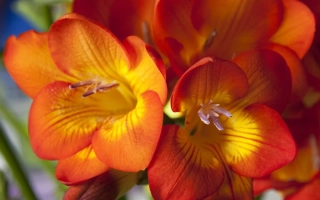
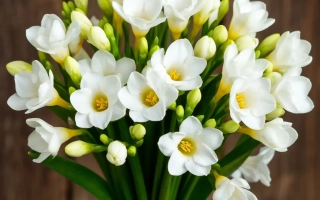
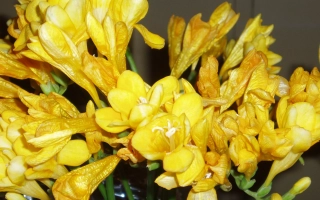
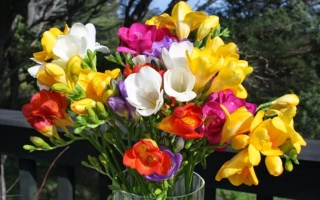
White, Yellow, Orange, Red, Purple
Assignment
Trim, Pot Culture, Landscape Design
Registration year
2011
About product

A compact and resilient freesia hybrid with a stunning color palette, perfect for both potted displays and professional cut flower production.
Plant Height
30-40
Petals Color
White, Yellow, Orange, Red, Purple
Assignment
Trim, Pot Culture, Landscape Design
Registration year
2011
Description
Freesia 'Vesna': Subtropical Elegance for Professional Growers
The 'Vesna' variety, developed by the FSBUN Federal Research Center for Subtropical Scientific Center of the RAS, is a prime example of breeding excellence originating from the Georgian climate. This hybrid is designed to bridge the gap between delicate ornamental aesthetics and robust agricultural performance, making it a reliable choice for commercial and hobby growers alike.
Technical Specifications and Application
- Compact Growth: With a height of 30-40 cm, it is perfectly suited for pot culture, eliminating the need for complex support systems.
- Color Range: Available in white, yellow, orange, red, and purple, providing flexibility for diverse floral arrangements.
- Dual Purpose: Optimized for both cut flower production and landscape design applications.
What sets 'Vesna' apart from common commercial cultivars is its exceptional structural integrity. While many freesia varieties tend to lose shape or become leggy under suboptimal light conditions, 'Vesna' maintains a dense, compact rosette and strong stems. This makes it particularly cost-effective for greenhouse production, as it requires less artificial lighting and space management.
For growers looking to diversify their portfolio, 'Vesna' offers a faster turnover cycle compared to standard tall hybrids. It is the optimal choice for those operating in limited-space environments, such as commercial patio displays or vertical floral installations. While it thrives in the subtropical climates typical of its origin, it adapts well to controlled indoor environments, provided that temperature fluctuations are managed during the bud initiation phase.
Video · 1 video
Suggest a video →Specifications
| Plant Height | 30-40 |
|---|---|
| Petals Color | |
| Assignment | |
| Registration year | 2011 |
| Catalog | Catalog → Freesia |
| Legal data |
Show · 2
|
| Country | Georgia |
Store offers
Prices are updated on loadLoading offers…
Aggregator catalog: prices are collected automatically from store websites, normalized by AI and converted at the current exchange rate. Before ordering, confirm the price and availability on the store's website. This block is not indexed by search engines — the data is loaded after the page opens.
Not yet комментариев. Be the first!






See also
Often considered together with this variety







Recently viewed
Products you’ve viewed on this site
Reviews · 0