
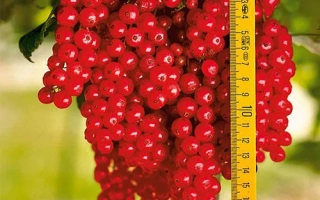

SKU #64664
·
37 views
Red Cluster
Currant
User rating
0 votes0% positive reviews
No ratings yet — be the first.
Type of Sort
Red Blackcurrant
Blackberry Type
Red
Berry Size
0.8-1.2
Berry Color
Red
About product

A stable, winter-hardy variety offering consistent yields with minimal maintenance requirements.
Type of Sort
Red Blackcurrant
Blackberry Type
Red
Berry Size
0.8-1.2
Berry Color
Red
Description
Field Experience with 'Krasnaya Grozd' Red Currant
The 'Krasnaya Grozd' variety, developed by the Krasnoyarsk Scientific Center SB RAS, serves as a reliable workhorse for regions with harsh climates. When managed in the field, this cultivar demonstrates high autonomy and predictability, which is crucial for growers who prioritize efficient maintenance over intensive care routines.
Operational Parameters and Maintenance
The shrub features a compact yet sturdy architecture, with canes ranging from 1 to 2 meters in height. This geometry allows for efficient land utilization without excessive overcrowding. Standard pruning practices are sufficient, as the variety responds well to shaping, which simplifies crown access during the harvest season. Given its selective breeding, the shrub shows excellent resilience to winter stress, eliminating the need for complex protective measures.
Resource Management and Yield
Maintaining 'Krasnaya Grozd' requires no specialized agrochemical protocols; a standard irrigation schedule and basic fertilization are sufficient. The primary asset is its fruit, measuring 0.8–1.2 cm in diameter. This size is optimal for both manual and mechanical harvesting, while the firm skin ensures excellent transportability, preventing fruit damage during transit. The vibrant red color serves as a clear indicator of ripeness, simplifying harvest logistics without the need for additional testing.
Harvesting and Processing Efficiency
The collection process is streamlined by the classic distribution of clusters on the branches. The berries remain firmly attached and do not drop prematurely, providing a comfortable window for completing harvest operations. The consistent productivity allows for accurate yield planning, establishing 'Krasnaya Grozd' as a dependable tool for securing a stable volume of berry output throughout the season.
Video · 4 videos
Suggest a video →Crop & resistance
Crop
Specifications
| Type of Sort | |
|---|---|
| Blackberry Type | |
| Berry Size | 0.8-1.2 |
| Berry Color | |
| Bush height, cm | 1.0, 2.0 |
| Registration year | 2019 |
| Catalog | Catalog → Currant |
| Legal data |
Show · 1 |
| Country | Russia |
Store offers
Prices are updated on loadLoading offers…
Aggregator catalog: prices are collected automatically from store websites, normalized by AI and converted at the current exchange rate. Before ordering, confirm the price and availability on the store's website. This block is not indexed by search engines — the data is loaded after the page opens.
Not yet комментариев. Be the first!
Alternatives
Currant saplings · similar varieties






See also
Often considered together with this variety




Recently viewed
Products you’ve viewed on this site
Reviews · 0