


SKU #70390
·
56 views
PENZENSkiye 16
Beans
User rating
0 votes0% positive reviews
No ratings yet — be the first.
Type by grain size
Small-seeded
Corn Color
Yellow
Ripening Period
Mid-season (91-110)
Plant Height
Tall (81-120)
About product

Penzenskoye 16 is an annual legume crop included in the State Register. The plant is characterized by upright and sturdy stems 100–150 cm tall with a fleshy structure. Leaves are twice–triple pinnate, consisting of two–three pairs of large elliptical leaflets with filamentous tips; stipules are large and provided with extrafloral nectaries, making the plant attractive to bees.Floristic features in…
Type by grain size
Small-seeded
Corn Color
Yellow
Ripening Period
Mid-season (91-110)
Plant Height
Tall (81-120)
Description
Penzenskoye 16 is an annual legume crop included in the State Register. The plant is characterized by upright and sturdy stems 100–150 cm tall with a fleshy structure. Leaves are twice–triple pinnate, consisting of two–three pairs of large elliptical leaflets with filamentous tips; stipules are large and provided with extrafloral nectaries, making the plant attractive to bees.
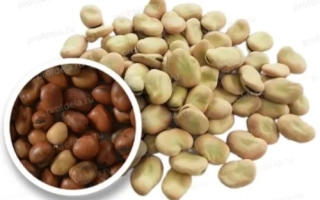
Floristic features include inflorescences in the form of racemes with 7–8 white flowers adorned with black spots on the pedicels. The fruit is a large pod covered with hairs; seeds are kidney-shaped, light-yellow at harvest and brown after long-term storage, usually three to five in one pod. The mass of 1000 seeds ranges from 295 to 350 g.
Technological advantages: the variety has high technological ease of cultivation – smaller seeds, resistant to lodging and pests, as well as a low level of infection with eschreitosis (2–3%) and brown leaf spotting (8–10%). The vegetation period is 98–112 days. For wide-row sowing, the sowing rate is 100–150 kg/ha, for row sowing – 160–250 kg/ha; sowing depth 5–8 cm.
Yield is high: average yield of green mass reaches 290–360 c/ha, dry matter – 80–115 c/ha, and seeds – 38–58 c/ha. High protein content makes Penzenskiye 16 a valuable feed product for agriculture.
Feed beans of this variety are also nectariferous: nectar productivity ranges from 15 to 30 kg of sugar per hectare, which attracts bees and bumblebees to flowers through holes in the corollas. This makes the plant useful both for feed production and for supporting the local ecosystem.
Floristic features include inflorescences in the form of racemes with 7–8 white flowers adorned with black spots on the pedicels. The fruit is a large pod covered with hairs; seeds are kidney-shaped, light-yellow at harvest and brown after long-term storage, usually three to five in one pod. The mass of 1000 seeds ranges from 295 to 350 g.
Technological advantages: the variety has high technological ease of cultivation – smaller seeds, resistant to lodging and pests, as well as a low level of infection with eschreitosis (2–3%) and brown leaf spotting (8–10%). The vegetation period is 98–112 days. For wide-row sowing, the sowing rate is 100–150 kg/ha, for row sowing – 160–250 kg/ha; sowing depth 5–8 cm.
Yield is high: average yield of green mass reaches 290–360 c/ha, dry matter – 80–115 c/ha, and seeds – 38–58 c/ha. High protein content makes Penzenskiye 16 a valuable feed product for agriculture.
Feed beans of this variety are also nectariferous: nectar productivity ranges from 15 to 30 kg of sugar per hectare, which attracts bees and bumblebees to flowers through holes in the corollas. This makes the plant useful both for feed production and for supporting the local ecosystem.
Crop & resistance
Disease resistance
Specifications hover over for a hint about the specification
| Type by grain size | |
|---|---|
| Corn Color | |
|
Ripening Period
Ripening Period
It takes 70-100 days until pepper reaches flowering stage, 130-160 days until technical fruit ripeness, and 135-180 days until physiological ripeness. |
Mid-season (91-110) |
| Plant Height | Tall (81-120) |
| Mass of 1000 seeds (g) | 301-350 |
| Potential Yield | 46-50 |
| Assignment | |
| Growing Conditions | |
| Number of seeds per pod | 3-4 |
| Registration year | 1978 |
| Catalog | Catalog → Beans |
| Legal data |
Show · 2
|
| Country | Russia |
Store offers
Prices are updated on loadLoading offers…
Aggregator catalog: prices are collected automatically from store websites, normalized by AI and converted at the current exchange rate. Before ordering, confirm the price and availability on the store's website. This block is not indexed by search engines — the data is loaded after the page opens.
Not yet комментариев. Be the first!




See also
Often considered together with this variety





Recently viewed
Products you’ve viewed on this site
Reviews · 0