


SKU #70552
·
58 views
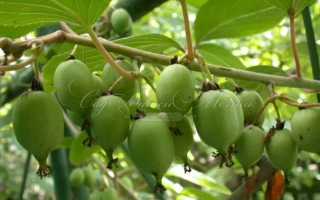
ACTINIDIA PURPUREA
Actinidia
User rating
0 votes0% positive reviews
No ratings yet — be the first.
Type of Blooming
Dioecious
Taste of Fruits
Sweet
Rind Color
Green
Registration year
2016
About product

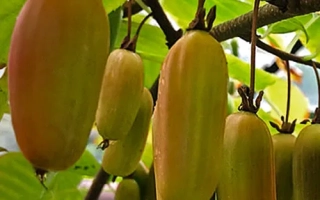
Sweet green fruit variety requiring trellises and the presence of male pollinators for successful harvest.
Type of Blooming
Dioecious
Taste of Fruits
Sweet
Rind Color
Green
Registration year
2016
Description
Practical Cultivation of 'Dachnaya' Actinidia
The 'Dachnaya' variety, developed by specialists at the Federal Research Center for Horticulture (S.K. Temirbekova, E.I. Kolbasina), is a classic example of Actinidia kolomikta adapted to temperate climates. When planning your garden, the key technical factor is the plant's dioecious nature: for a successful harvest, you must plant both female vines and male pollinator vines at a ratio of approximately 5:1.
Agrotechnical Scenarios and Maintenance
Gardeners use this variety both for its sweet green fruit and as an ornamental climbing vine. To achieve consistent productivity, focus on these operational priorities:
- Trellis Systems: As a vigorous vine, 'Dachnaya' requires robust structural support. Plan for at least 2 meters in vertical height. Given the yearly growth rate of 1–2 meters, ensure the support system is anchored deeply to withstand seasonal wind loads.
- Strategic Planting: While the plant thrives in sunny locations, young vines are sensitive to intense midday sun. Planting along east-facing walls provides ideal exposure for development while offering protection from harsh winds.
- Soil Management: The root system is superficial and sensitive to drought. Regular irrigation is mandatory, combined with a thick layer of organic mulch to maintain stable soil moisture levels.
- Pruning: Avoid spring pruning to prevent heavy sap bleeding. The most effective time to perform structural pruning is in late summer, which allows for better management of the canopy without compromising plant vigor.
Because 'Dachnaya' is a naturally resilient variety, it does not require an intensive spray program. Your primary operational task involves managing the growth trajectory of the vines and protecting young plants from cats, which are notably attracted to the scent of the Actinidia foliage and bark.
Video · 1 video
Suggest a video →Specifications
| Type of Blooming | |
|---|---|
| Taste of Fruits | |
| Rind Color | |
| Registration year | 2016 |
| Catalog | Catalog → Actinidia |
| Legal data |
Show · 10
|
| Country | Russia |
Store offers
Prices are updated on loadLoading offers…
Aggregator catalog: prices are collected automatically from store websites, normalized by AI and converted at the current exchange rate. Before ordering, confirm the price and availability on the store's website. This block is not indexed by search engines — the data is loaded after the page opens.
Not yet комментариев. Be the first!





See also
Often considered together with this variety






Recently viewed
Products you’ve viewed on this site
Reviews · 0