

Verticillium wilt
Verticillium spp.
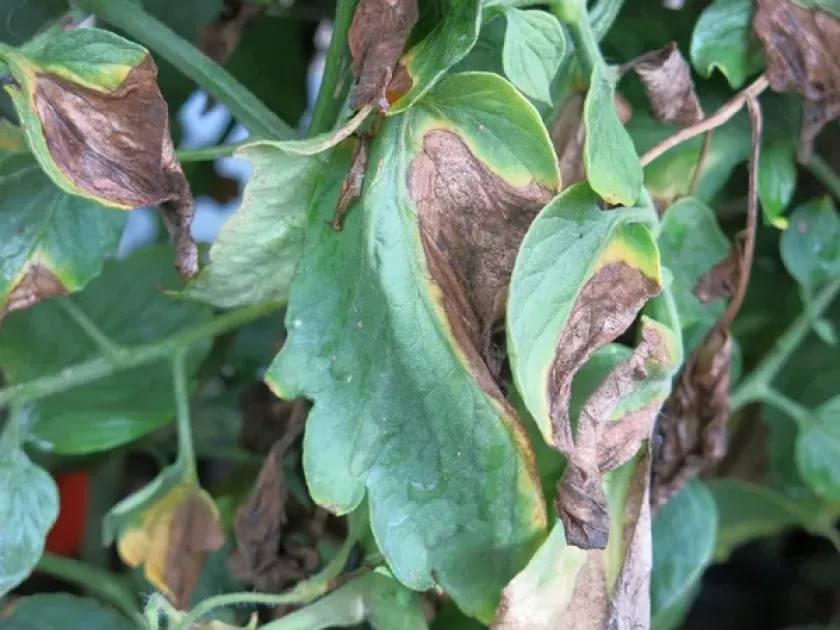
Description
Symptoms
The primary symptom is the wilting of foliage, which typically starts at the base of the plant and progresses upwards, often appearing more pronounced during periods of heat stress.
Chlorosis, often presenting as a V-shaped yellowing on the leaf margins or between veins, is a hallmark sign. Affected leaves eventually turn brown and necrotic but may remain attached to the stem for some time.
Upon slicing into the main stem or lateral branches, one can observe distinct vascular browning or discoloration, indicating that the xylem vessels have been blocked by fungal growth.
In highly humid conditions, a sparse, greyish fungal growth might appear on the stems, though this is not always visible to the naked eye without magnification.
Stunted growth and premature fruit ripening or dropping are common, leading to significant physiological stress for the entire plant system.
Pathogen
Verticillium wilt is caused by soil-borne fungi of the genus Verticillium, with Verticillium dahliae and Verticillium albo-atrum being the most prevalent and economically damaging species.
These fungi persist in the soil as microsclerotia, which are highly resilient structures capable of surviving in the environment for many years, even in the absence of a suitable host plant.
The infection initiates when fungal spores or mycelium penetrate the plant's root system, usually through small wounds or natural openings, eventually colonizing the xylem vessels.
The pathogen is highly versatile, affecting a diverse range of crops including ornamentals like dahlias, as well as staples like cassava, bananas, rice, and cacao.
Transmission occurs through contaminated soil, infected seeds or transplants, and contaminated irrigation water, making field sanitation a critical component of disease management.
Conditions for development
Disease development is highly dependent on environmental factors, with moderate temperatures between +20°C and +25°C providing the most favorable conditions for fungal growth.
Poor soil aeration and compaction create an environment that stresses plant roots, making them significantly more susceptible to Verticillium colonization.
Fluctuating soil moisture levels, alternating between waterlogging and drought, exacerbate the symptoms as the damaged root system struggles to support the water needs of the canopy.
Soil pH plays a role, with neutral to alkaline soils often favoring the development of the pathogen, whereas strongly acidic environments can sometimes inhibit its spread.
Continuous cropping of susceptible plant species on the same ground leads to a significant buildup of microsclerotia in the soil profile, ensuring the disease persists.
Why it matters
The most severe damage caused by Verticillium wilt is the systemic obstruction of the vascular system, which prevents the plant from transporting water and nutrients from the roots to the shoots.
This physiological restriction leads to wilting, reduced photosynthetic efficiency, and significant crop yield losses, often rendering the harvest unmarketable.
In perennial trees and woody shrubs, the disease can lead to branch dieback or the death of the entire plant, causing long-term financial impacts for growers.
Because the fungus is located deep within the vascular tissue, it is shielded from many common contact fungicides, making complete control extremely difficult.
The long-term persistence of the pathogen in the soil forces growers to adopt long rotations or abandon specific land areas for the cultivation of highly susceptible crops.
Protection
The most reliable control method is the integration of long-term crop rotation, avoiding susceptible species for a minimum of 5 to 7 years to reduce soil inoculum levels.
Growers should prioritize the use of certified, disease-free planting material and maintain strict field sanitation by removing and destroying crop residues.
Improving soil health through the addition of organic matter and using biological control agents like Trichoderma species can help create a suppressive soil environment.
Managing soil moisture through efficient irrigation systems and preventing root damage during cultivation reduces the entry points for the pathogen.
- Select and plant resistant or tolerant cultivars where available.
- Practice soil solarization in greenhouse settings to kill microsclerotia.
- Implement rigorous weed control to eliminate alternate hosts of the fungus.
- Remove infected plants, including the root ball, as soon as symptoms are detected.
In brief
5
Affects crops
Biology
Pathogens and affected parts
Pathogens
Affected plant parts
whole plantrootstem
Content graph
Affects crops · 5
Reference
Connections · Verticillium wilt
Most often together:
Marketplace
Products · 2057












Community
Discussion
No discussions yet — be the first.