

Disease
Especially harmful
Septoria glume blotch
Septoria glume blotch
Description
Symptoms
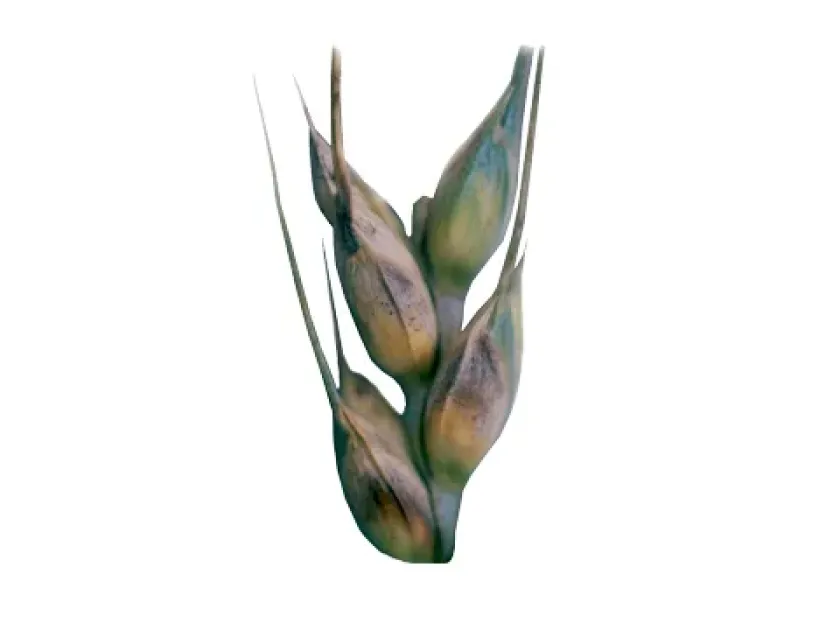
Symptoms initially appear as small, brownish spots on the glumes of the wheat head. Over time, these lesions expand, often turning dark brown or grey with a purplish margin.
The presence of pycnidia, appearing as tiny black dots within the lesions, is a diagnostic feature of the disease. These are easily visible during periods of high humidity.
Affected heads often show irregular patches of discoloration, and in severe cases, the entire spike may become prematurely blighted and shriveled.
Unlike leaf blotch, head infection specifically targets the glumes, disrupting the plant's ability to fill the grain properly and leading to spike deformity.
In advanced stages of infection, the entire head may darken significantly, which can sometimes be confused with other fungal diseases without proper microscopic identification.
Pathogen
The disease is caused by the fungus Parastagonospora nodorum, formerly classified as Septoria nodorum. This pathogen belongs to the ascomycetes and is a major threat to wheat crops globally.
The fungus survives on crop debris and in seeds as mycelium and pycnidia. It can remain dormant in soil for several seasons, waiting for favorable conditions to reinfect new crops.
Spread occurs primarily through conidia, which are splashed by raindrops onto the upper leaves and heads of the wheat plant. Wind also plays a significant role in long-distance dissemination.
The pathogen completes its lifecycle by producing both asexual spores (conidia) and sexual spores (ascospores), allowing it to adapt to various environmental conditions.
Although it primarily infects wheat, the fungus can also impact other small-grain cereals, making it a persistent challenge for integrated pest management strategies.
Conditions for development
Septoria glume blotch thrives in warm, humid weather conditions, with optimal development occurring between 18 and 25 degrees Celsius and high relative humidity.
Rainfall is the most critical factor for the disease, as water splashes are required to move spores from the lower canopy to the heads during the heading and flowering stages.
The lack of crop rotation, particularly planting wheat consecutively, leads to a high concentration of fungal inoculum in the field, significantly increasing infection rates.
Dense crop stands create a stagnant microclimate that prevents foliage from drying out, prolonging the duration of leaf and head wetness required for fungal penetration.
High nitrogen levels that promote rapid, succulent growth can make the plant tissues more susceptible to fungal entry and establishment, especially when combined with wet weather.
Why it matters
The disease causes significant economic losses by reducing grain size and weight. Infected plants often produce shriveled kernels, which drastically lower the overall yield.
Quality issues, such as reduced test weight and poor milling properties, make the harvest less desirable for industrial and food processing applications.
By interfering with the plant's photosynthetic capability and grain filling process, the fungus forces the plant into premature maturity, cutting off essential nutrient accumulation.
In cases of severe infestation, yield losses can range from 15% to 40% or more, depending on the severity of the weather conditions during the critical flowering stage.
Seeds harvested from heavily infected fields are often contaminated with the pathogen, requiring thorough cleaning and chemical treatment before they can be used for planting.
Protection
Effective management begins with cultural practices such as crop rotation, deep plowing to bury infected crop residues, and the use of resistant wheat cultivars.
Seed treatment with fungicides is essential to eliminate seed-borne inoculum and protect the crop during the early stages of development.
Fungicide application during the booting and heading stages is a crucial management tool to protect the flag leaf and the head from primary infection cycles.
Managing seeding rates helps ensure adequate airflow, which keeps the crop canopy drier and discourages the rapid spread of the fungus.
Balanced fertilization, particularly maintaining adequate phosphorus and potassium levels, helps build stronger cell walls, increasing the plant's inherent resistance to infection.
Content graph
Connections · Septoria glume blotch
Most often together:
Marketplace
Products · 82







Retardin EW, EV
China Chemical Industrial & Rice Co. Ltd
Fungicides
0
0
·
33
2 offers
9.41 €per 1 l
Buy





Community
Discussion
No discussions yet — be the first.