
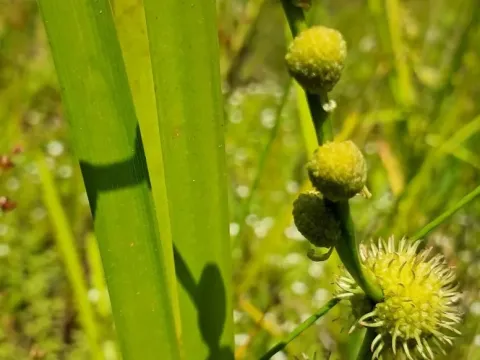
Bur-reed
Sparganium
Bur-reed (Sparganium) is a genus of perennial aquatic and wetland plants belonging to the Typhaceae family. These plants are widely distributed throughout the Northern Hemisphere, inhabiting shallow waters, marshes, and the margins of slow-moving streams.
What the section contains

Bur-reed
Botanically, the plant is characterized by its sword-shaped leaves and distinct, spherical inflorescences that resemble small prickly balls. It utilizes a rhizomatous root system, allowing it to spread effectively and stabilize the substrate in aquatic environments.
The cultural requirements for Bur-reed focus primarily on water availability. It thrives in soils that remain constantly saturated or submerged. A rich, silty, or organic-heavy sediment is ideal for optimal nutrient absorption and vigorous growth of the plant stands.
Regarding climate, Bur-reed is highly adaptable to a variety of temperate conditions. It requires consistent moisture levels and performs best in locations that offer full sunlight to partial shade. The management of water levels is the most critical aspect of the plant's agronomy.
Host-plant utilization of the Bur-reed is diverse, ranging from its role in biofiltration systems to prevent nutrient runoff, to the stabilization of banks in water management projects. Additionally, it provides essential habitat and nesting materials for various species of waterfowl.
Pests affecting Bur-reed include specific types of aquatic beetles and larvae that feed on the foliage. While usually not catastrophic, significant infestations can reduce the photosynthetic area and overall vigor of the plant, especially during warmer, drier seasons.
Diseases such as leaf blight and various fungal pathogens can emerge under conditions of poor water circulation or excessive plant density. Maintaining adequate spacing and ensuring the water quality remains high are the primary preventative measures for these plant threats.