
Broadleaf cattail
Typha latifolia
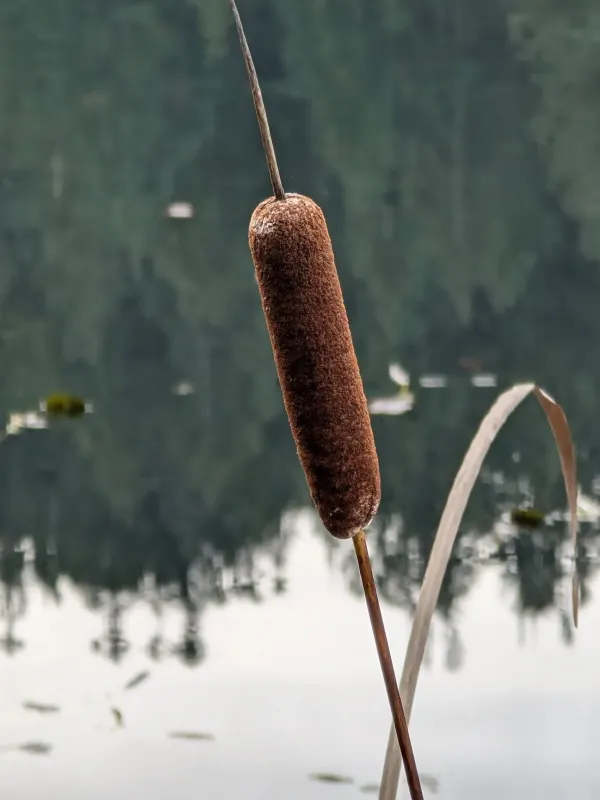
Description
Sowing dates
The broadleaf cattail is a perennial rhizomatous plant belonging to the Typhaceae family. It is a highly productive wetland species that spreads primarily through robust horizontal rhizomes, allowing it to rapidly colonize suitable aquatic environments.
In agricultural settings, propagation is most successfully achieved by dividing rhizomes. These segments are planted in shallow water bodies during the spring when temperatures begin to rise, ensuring optimal conditions for root development and initial establishment.
While seed-based propagation is possible, it is rarely used for commercial plantations due to the specific moisture requirements needed for germination. Seeds require stable water levels and consistent temperatures, making vegetative division the more reliable and rapid method.
The optimal planting time typically falls within the spring months. Planting should be done in areas where water depth does not exceed 40–50 cm to allow the young shoots to reach the surface while remaining securely anchored in the nutrient-rich silt or peat.
Once established, the plantation forms dense stands that require minimal maintenance. Providing the water level remains stable, the plant will naturally expand its rhizome system, ensuring a high density of shoots year after year.
Growing requirements
Broadleaf cattail is an obligate hydrophyte, meaning it requires a permanent water supply for its root system. It thrives in wetlands, pond margins, and slow-moving water bodies, where it can access abundant nutrients from the sediment.
Light availability is critical for this species. It is a heliophyte, performing best in full sun exposure. Significant shading from trees or structures will lead to stunted growth, reduced stem thickness, and lower overall biomass production.
The ideal soil substrate for this plant consists of organic-rich mud, silt, or peat. These substrates provide the necessary nitrogen and phosphorus levels for rapid development, making the plant an excellent candidate for constructed wetlands and phytoremediation projects.
The plant is highly adaptable to various climatic conditions, demonstrating strong winter hardiness. Its rhizomes can survive frozen water conditions, and it easily recovers once the spring thaw begins, making it suitable for a wide range of temperate climates.
Water quality, while generally robust, should be managed to avoid extreme acidification or heavy metal toxicity. Although it acts as a biofilter, maintaining a balanced hydrological regime is essential to ensure maximum vigor and stem quality.
Yield
The biomass yield of broadleaf cattail is impressive, with well-managed plantations capable of producing between 15 to 20 tons of dry matter per hectare annually. This high productivity makes it a valuable source of raw materials for various industrial applications.
Yield is primarily driven by the fertility of the aquatic sediment. In nutrient-rich environments, the plant exhibits vigorous growth, resulting in longer, thicker stems that are highly prized for industrial use in paper manufacturing and construction materials.
The rhizomes represent a secondary but significant yield component. Rich in starch, they can be harvested and processed into flour or other carbohydrate-based products, providing an additional economic incentive for cultivation.
Maximum productivity is typically observed from the third to the fifth year of cultivation. During this phase, the root system is fully mature and capable of supporting maximum shoot density, ensuring a reliable supply of raw material.
Sustainable yield management requires periodic harvesting. Regular thinning of the stands prevents overcrowding, which would otherwise lead to a decline in individual plant size and a reduction in the overall efficiency of the plantation.
Main diseases and pests
Broadleaf cattail is generally resistant to many pests, but dense stands can be susceptible to fungal infections, particularly leaf spot diseases. These are often exacerbated by poor air circulation, which can be mitigated through proper plantation spacing.
Pests such as specialized aphids and certain moth larvae may attack the leaves and developing inflorescences. While rarely lethal to the entire plant, large infestations can reduce the quality of the harvested biomass if not monitored closely.
Mammals like muskrats and voles pose a real threat to the rhizomes. These animals forage on the rootstocks, which can lead to localized destruction of the plantation and require measures for population control or protective fencing in high-value areas.
Environmental stressors, particularly shifts in water chemistry or excessive pollutant accumulation, can reduce the long-term viability of the plantation. Monitoring water parameters is essential to ensure that the plant maintains its natural defense mechanisms.
Good agricultural practice involves regular observation of the stands. Early detection of health issues, combined with proper water management, is usually sufficient to maintain the long-term productivity of the cattail crop without chemical interventions.
Harvesting
The harvest of the aerial parts is conducted in late summer or early autumn, when the stems have achieved maximum structural integrity. This timing ensures that the fiber content is optimal for processing into paper, insulation, or building boards.
Mechanical harvesting equipment, such as amphibious harvesters, is recommended for large-scale operations. These machines allow for the clean cutting of stems at the base, minimizing disturbance to the rhizomes and promoting rapid regrowth in the following season.
After harvesting, the biomass must be dried to prevent degradation or fungal rot. Reducing the moisture content to below 20% is essential for safe, long-term storage and to maintain the quality of the raw material before it is shipped for processing.
Rhizome harvesting typically occurs in late autumn, after the plant has translocated its starch reserves into the root system. This ensures the highest possible nutrient value for potential industrial or dietary use of the harvested rhizomes.
Sustainable harvesting techniques focus on leaving a portion of the rootstock intact to facilitate regeneration. By rotating harvest areas within a plantation, growers can ensure consistent production while maintaining the ecological health of the wetland.