
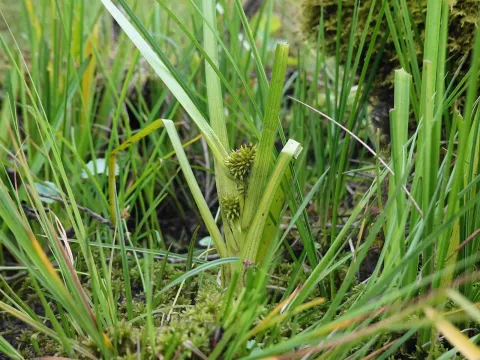
Clustered bur-reed
Sparganium glomeratum
Clustered bur-reed (Sparganium glomeratum) is a perennial aquatic plant belonging to the Typhaceae family. It is typically found in shallow water habitats, including marshes, ponds, and the edges of slow-moving streams throughout northern latitudes.
What the section contains
Clustered bur-reed
Botanically, the species is characterized by its distinct spherical flower clusters and lanceolate leaves that can emerge above or float on the water surface. Its root system is highly adaptive to anaerobic soil conditions common in wetlands.
The plant thrives in regions with temperate or boreal climates, showing high resilience to cold temperatures. It prefers nutrient-rich substrates and full sunlight exposure, which are essential for vigorous growth and successful seed production.
Cultivation requirements involve maintaining a constant water level, as the plant is sensitive to periodic drought. The ideal environment provides stable, shallow water depths that support the development of its vegetative structure without causing suffocation.
In an agricultural context, this plant is primarily utilized for wetland restoration projects and natural water filtration systems. It helps in stabilizing sediment and improving water quality, making it a valuable asset for eco-friendly land management.
Common diseases affecting the clustered bur-reed include fungal infections such as rusts and leaf spots that develop during periods of high humidity and poor water circulation. These pathogens can weaken the structural integrity of the stems.
Pests such as aquatic weevils and certain larvae often feed on the foliage and the base of the plant. Such herbivory can lead to secondary bacterial infections that significantly reduce the vitality of the plant population.
Intense competition from invasive macrophytes often limits the growth of bur-reed patches. If the water body becomes overgrown with aggressive algal blooms, the resulting light and oxygen starvation can cause rapid decline.
Chemical contamination and excessive nutrient loading from agricultural runoff can trigger toxic responses in the plant, manifesting as stunted growth and chlorosis. The plant is particularly sensitive to sudden shifts in water chemistry.
Effective management includes routine field scouting to identify pest pressure early and managing competing vegetation. Mechanical thinning of overly dense stands can promote better airflow and reduce the risk of disease spread within the colony.