
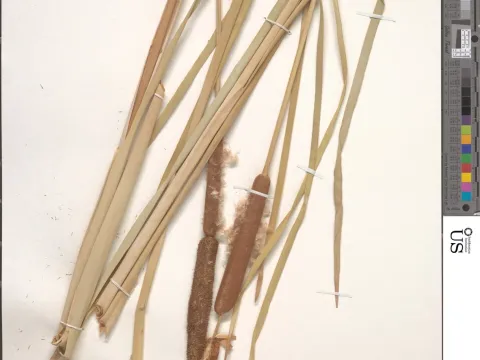
Awl-leaved cattail
Typha subulata
The awl-leaved cattail (Typha subulata) is a perennial wetland plant belonging to the Typhaceae family. It is known for its extensive rhizome system that enables rapid colonization of suitable aquatic habitats.
What the section contains
Awl-leaved cattail
In agricultural settings, propagation is typically achieved through rhizome division. This method ensures the establishment of healthy stands by transplanting sections of the rootstock into muddy soil.
The ideal time for planting is early spring. Once the water temperature consistently rises above 15 degrees Celsius, the rhizomes enter an active growth phase and root quickly.
While seed propagation is possible, it is rarely used in commercial production due to the slow initial growth rate and the complexity of managing small, delicate seedlings in a water environment.
Planting density is crucial for commercial success; spacing should be maintained between 50 and 80 cm to prevent overcrowding while ensuring a full cover of the planting area within two growing seasons.
This species thrives in shallow water environments, typically requiring depths between 10 and 40 cm. It prefers nutrient-rich, silty or peat-based substrates.
Sunlight exposure is a critical factor for the awl-leaved cattail. To maximize biomass production, planting sites should be open and free from shadows cast by trees or buildings.
Water quality is significant; although the plant can tolerate some variation, it performs best in stagnant or slow-moving water bodies without high levels of chemical pollutants.
Climate adaptability is one of its strengths, as it can withstand varying temperatures, though it requires sufficient depth to prevent the substrate from freezing entirely during winter.
Regular maintenance of the water level is necessary during the establishment phase to ensure the root system remains sufficiently hydrated and anchored.
The awl-leaved cattail is valued for its high fiber content, which makes it a sustainable resource for the paper and pulp industry, as well as for making bio-composites.
On productive sites, the yield can reach up to 15 tonnes of dry biomass per hectare. This high yield makes it an attractive candidate for renewable resource farming.
The stalks and leaves are versatile materials used in traditional weaving, the creation of acoustic insulation panels, and as a natural material in eco-friendly building projects.
Rhizomes serve as a source of carbohydrates and starch, which can be extracted or processed into animal feed supplements, provided they are harvested in the correct season.
Total yield is optimized when the plant reaches maturity in the third year after planting, at which point the density of the crop allows for sustainable harvesting cycles.
While relatively robust, the crop can be affected by various fungal pathogens that manifest as leaf spots, especially in conditions of poor air circulation and high humidity.
Insects, particularly stem-boring larvae, represent the most significant pest threat, as they can weaken the structural integrity of the stems and reduce their value for industrial use.
Competition from more aggressive species like common reed (Phragmites australis) can pose a risk if the monoculture planting is not periodically managed and weeded.
Environmental stress, such as severe droughts or industrial runoff, can lower the plant's resistance, making it more susceptible to opportunistic diseases.
Effective management includes regular monitoring and mechanical removal of dead biomass at the end of the season to minimize the buildup of pests and potential pathogens.
Harvesting is usually conducted at the end of the vegetative cycle, when the biomass is driest and the nutrient content in the leaves has stabilized.
In large-scale operations, specialized amphibious machinery is used to cut the cattails above the water line, ensuring that the rhizomes remain intact for regeneration.
Post-harvest management is vital; the biomass must be dried immediately after collection to prevent fungal decay, which would render the fiber unusable for industrial processing.
Storage should take place in well-ventilated, dry areas to maintain the quality of the harvested material throughout the winter months until it is transported to the processing facility.
If harvesting rhizomes for starch extraction, timing is shifted to late autumn when the starch content in the roots is at its maximum peak before dormancy.