
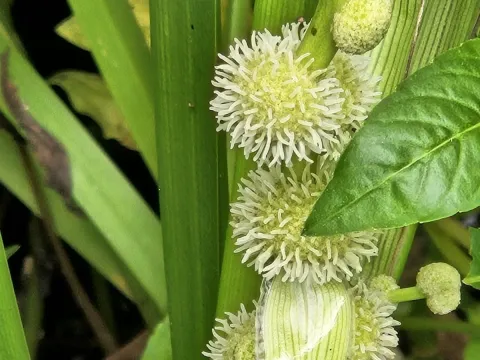
American bur-reed
Sparganium americanum
American bur-reed (Sparganium americanum) is a perennial aquatic plant belonging to the Typhaceae family. Originating from North America, it is commonly found in wetlands, swamps, and along the margins of freshwater bodies, serving as an important ecological component.
What the section contains
American bur-reed
The crop thrives in shallow water or muddy shorelines where the water level remains relatively consistent. It requires high sunlight exposure to produce robust vegetative growth, although it can tolerate partial shade in specific natural habitats during the peak of summer.
Regarding soil requirements, the species favors organic-rich, silty, or mucky substrates. A neutral to slightly acidic pH level is ideal for nutrient absorption and optimal growth performance, ensuring the health of the rhizomatous root system throughout the year.
The climate requirements for this plant are quite adaptable, ranging from cool to temperate zones. It is fully hardy and capable of surviving winter conditions, provided the root zone remains sufficiently submerged or protected from complete desiccation by freezing.
Economically, American bur-reed is utilized primarily for its biofiltration capabilities in wastewater treatment and as a tool for erosion control along reservoir banks. It also provides essential habitat and food sources for various aquatic wildlife species.
Fungal infections of the rhizomes represent a major threat, particularly in stagnant water environments where aeration is poor. Root rot can quickly spread through a population if water quality deteriorates or becomes excessively nutrient-dense without proper circulation.
Pests such as specialized beetles and lepidopteran larvae may feed on the foliage, significantly affecting the plant's health. Early detection is necessary to prevent these insects from causing widespread damage to large stands of the crop.
Competition from invasive aquatic weeds poses a constant challenge for cultivation. Vigorous species can outcompete the bur-reed for space and sunlight, often requiring active management or selective weeding to maintain the crop's dominance in the desired area.
Hydrological instability, specifically extreme water level fluctuations, can lead to crop loss. When the soil substrate dries out completely, the rhizomes lose their ability to support the vegetative parts, leading to rapid decline and potential mortality.
Environmental stressors like chemical runoff or heavy metal accumulation in the water can inhibit growth. While the plant possesses natural filtering properties, excessive pollutants can overwhelm its physiological defense mechanisms and cause leaf necrosis.