
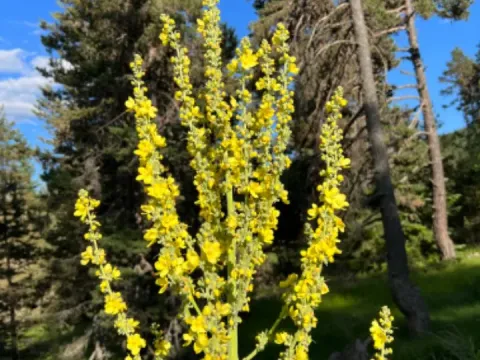
Armenian Mullein
Verbascum armenum
Armenian Mullein belongs to the perennial herbaceous plant group within the Scrophulariaceae family. In agricultural practice, seeds are typically sown in the autumn or early spring, provided they undergo prior stratification, as the seeds have low germination energy without a cold treatment period.
What the section contains
Armenian Mullein
When sowing in open fields, it is crucial to remember that the seeds are extremely small. Therefore, they should be sown at a depth of no more than 0.5 to 1 centimeter. The soil surface should be lightly rolled after sowing to ensure proper contact with the moist substrate.
Seedlings typically emerge within 14 to 21 days if temperatures are maintained between 15 and 20 degrees Celsius. During the first year of life, the plant forms a basal rosette of leaves, while flowering usually begins in the second year of growth.
If using the seedling method, seeds should be sown in March within greenhouses or cold frames. Transplants are moved to their permanent location once they reach the 3–4 true leaf stage, maintaining a spacing of at least 40 by 50 centimeters for healthy development.
The optimal planting density is approximately 4 to 6 plants per square meter. Excessive crowding of the crop leads to stem elongation and significantly increases the risk of fungal disease outbreaks under high humidity conditions.
This crop is a light-loving plant that prefers open, well-illuminated areas. In shaded locations, Armenian Mullein loses its ornamental quality and experiences a decrease in the concentration of biologically active compounds within its leaves and flowers.
The plant has moderate soil requirements but thrives best in light, well-drained sandy or loamy soils with a neutral or slightly alkaline pH level. Good aeration is essential for optimal root system expansion.
Preventing moisture stagnation in the root zone is a critical requirement. Waterlogged conditions often lead to the rapid rotting of the root crown, which remains the most significant cause of crop failure during the autumn and winter months.
Mullein is characterized by high drought tolerance, making it a promising crop for regions with limited rainfall. Its extensive taproot system allows the plant to efficiently access water from deeper soil horizons.
The plant does not require intensive nitrogen fertilization, as excess nitrogen promotes excessive vegetative growth at the expense of reproductive functions. It is recommended to apply phosphorus-potassium fertilizers in early spring to boost the plant's natural immunity.
Major pests affecting Mullein include various insect species that feed on foliage, such as cutworm caterpillars and certain types of leaf beetles. These pests can significantly reduce leaf surface area, which negatively impacts the overall photosynthetic process of the crop.
In conditions characterized by high humidity and poor air circulation, the crop is frequently affected by powdery mildew. This disease manifests as a white, powdery coating on the leaves, eventually leading to yellowing and premature tissue death.
To control fungal pathogens, growers should focus on timely thinning of plantings and the removal of infected plant debris. In cases of mass infection, the application of copper-based fungicides or appropriate biological control agents may be permitted.
Root rot represents the greatest threat during the early stages of growth. This is typically triggered by soil-borne pathogens resulting from improper irrigation management or selecting heavy, poorly structured soils for cultivation.
To prevent the spread of pests and diseases, it is highly recommended to follow a crop rotation cycle. Avoid planting Mullein after other members of the Scrophulariaceae family to prevent the accumulation of specific soil-borne pathogens in the growing area.