
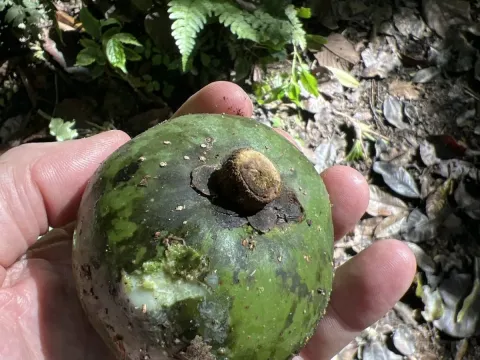
Green sapote
Pouteria viridis
Green sapote (Pouteria viridis) belongs to the Sapotaceae family and is a significant fruit crop in its native Central American regions. It is typically propagated via seeds or grafting.
What the section contains
Green sapote
Seeds should be planted immediately after extraction from the fruit, as they lose viability rapidly if allowed to dry out. A rich, well-draining soil mix is essential for success.
Germination is most effective at temperatures between +25°C and +28°C. Keeping the seedbed consistently moist without waterlogging is critical during the initial weeks.
Grafting is highly recommended for commercial production, as it ensures earlier fruiting and helps maintain the desirable characteristics of the parent tree.
Young seedlings require partial shade to establish roots and should be hardened off to direct sunlight before being transplanted to their final location in the field.
This species thrives in humid tropical climates. It is well-adapted to high-altitude areas, which gives it a slight advantage over more lowland-focused Sapotaceae species.
The ideal soil should be deep, fertile, and possess a slightly acidic to neutral pH. Proper drainage is paramount to prevent root rot in wetter climates.
Regular irrigation is necessary during the establishment phase, although established trees show moderate tolerance to brief periods of reduced moisture.
Wind protection is essential, as the branches of Pouteria viridis are somewhat brittle and can be damaged by strong gusts, leading to tree health decline.
The tree prefers environments ranging from 500 to 1500 meters above sea level, enjoying moderate temperatures rather than intense, sweltering heat.
Seed-grown trees typically take 5 to 7 years to start bearing fruit. This long waiting period is a common characteristic of many species within the Sapotaceae family.
Grafted specimens perform much better in commercial settings, often beginning to bear fruit in as little as 3 to 4 years after planting.
A single mature tree can produce a substantial harvest of hundreds of fruits, with the bounty usually peaking during specific seasonal intervals.
The fruit is prized for its soft, sweet, pumpkin-like custard texture. It is a popular local delicacy often eaten fresh or utilized in various desserts and shakes.
Proper nutritional management, including the application of balanced NPK fertilizers and essential micronutrients, significantly boosts total yield and fruit quality.
Fruit flies are the most significant threat to the crop, as they often target the ripening fruits, rendering them unfit for market consumption.
Scale insects and mealybugs can infest the foliage and tender stems, causing yellowing and stunted growth if left unmanaged.
Root rot is a major risk if the soil remains waterlogged. Proper site selection and drainage management are the most effective preventative measures.
Maintaining a clean orchard floor and pruning the canopy to allow for better airflow helps significantly in reducing the incidence of fungal pathogens.
- Regular monitoring for pest activity
- Strategic pruning for better light penetration
- Use of organic oils for minor infestations
Harvesting is a manual process that requires careful timing. Fruits are picked when the skin changes color and gives slightly to gentle finger pressure.
Premature harvesting results in poor fruit quality, as the fruit will not develop its full flavor or smooth texture if picked too far in advance.
Handling must be delicate to avoid bruising, as the skin of the green sapote is thin and susceptible to damage during transit from the field to the market.
Once harvested, the fruits should be kept in a well-ventilated, cool place to ripen fully before they reach the consumer.
Farmers often perform multiple pickings throughout the harvest window, as fruits on a single tree do not ripen simultaneously, ensuring a continuous supply.