
Labourdonnaisia
Labourdonnaisia
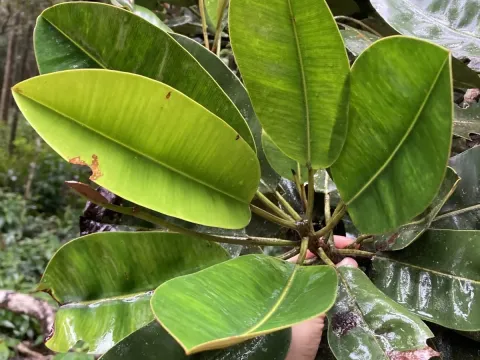
Labourdonnaisia is a genus of tropical trees belonging to the Sapotaceae family. These plants are native to the Mascarene Islands in the Indian Ocean, where they grow in humid, high-altitude or coastal rainforest ecosystems.
What the section contains

Labourdonnaisia
Cultivating this plant requires a specific tropical environment with high air humidity and consistent temperatures throughout the year. It does not tolerate frost or extreme dry spells, as these conditions stress the vascular system of the tree.
The soil requirements are strict: the tree needs well-drained, nutrient-rich soil with a deep organic layer. Waterlogging must be avoided at all costs, as the roots are prone to decay if the oxygen levels in the substrate drop too low.
Agrotechnical management involves slow-growth monitoring. Due to its naturally slow development, the plant requires minimal pruning but demands careful site selection to ensure it receives appropriate sunlight while remaining protected from strong winds.
Economic uses historically revolve around the high-quality, durable timber produced by these trees. Because of their slow growth cycle, these trees are more valuable for ecological conservation and scientific study than for commercial lumber production.
Habitat loss due to deforestation is the primary threat to Labourdonnaisia species in their native environment. Expanding agricultural land directly competes with the remaining natural forests where these trees reside.
Invasive plant species are a constant danger, as they grow faster than Labourdonnaisia and choke out younger trees. Clearing undergrowth around young specimens is necessary for their survival in mixed-species plantations.
Pests such as seed-boring insects significantly reduce the success of natural regeneration. These insects target the fruits, preventing the development of healthy seeds and limiting the spread of the species.
Pathogenic fungi can infect the trunk and roots if the tree is weakened by environmental stress. Monitoring for signs of dieback or unusual discoloration of leaves is essential for maintaining the health of the specimens.
Climate change poses a long-term risk to the species, particularly if the frequency of extreme weather events increases. Sustained drought conditions can permanently damage the foliage and impede the tree's ability to store resources for reproduction.