
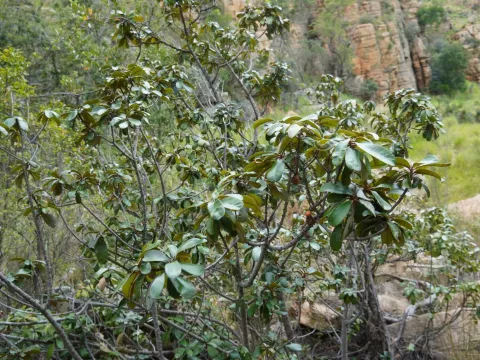
Englerophytum
Englerophytum
Englerophytum is a genus belonging to the Sapotaceae family, consisting of evergreen trees and shrubs native to tropical Africa. These plants typically inhabit tropical forests and riparian zones.
What the section contains


Englerophytum
The climate requirements for this genus are strict; it thrives only in frost-free, humid tropical environments. Constant temperatures and high moisture levels are critical for successful plant development.
Regarding soil, Englerophytum requires deep, well-draining soils rich in organic matter. They generally prefer acidic or neutral soil environments, avoiding heavy clay soils that retain water and lead to root rot.
Botany-wise, the plant is characterized by its leathery leaves and the phenomenon of cauliflory, where flowers and subsequent fruits emerge directly from the woody trunks and branches.
Economically, the fruits are a traditional food source in their native ranges. They are appreciated for their unique flavor profile and are often harvested from the wild, though selective cultivation is becoming more relevant for biodiversity preservation.
The primary threats to Englerophytum in agricultural settings are fungal infections. Root rot, often caused by poor drainage, is the most common pathology leading to the loss of mature trees.
Pest pressure often comes from mealybugs and scale insects. These pests colonize the stems and undersides of leaves, sucking sap and causing significant stress to the host plant.
Fruit damage is frequently attributed to fruit flies that lay eggs in the ripening flesh. This process creates entry points for secondary bacterial and fungal infections that spoil the harvest.
Nutrient deficiency, particularly iron chlorosis, is a common issue when soil pH is not properly managed. Regular soil testing and controlled fertilization are required to maintain plant vigor.
Maintenance of canopy openness through pruning is a key agrotechnical practice. It improves airflow around the trunk and branches, reducing the humidity pockets that favor pest and disease outbreaks.