
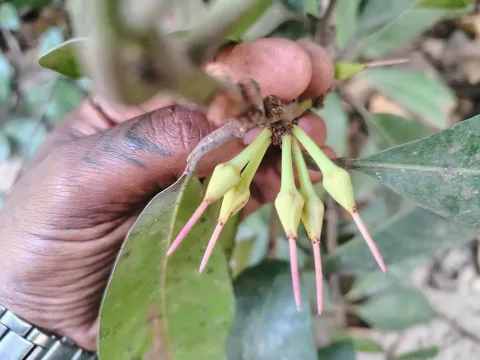
Madhuca
Madhuca
Propagation of Madhuca is primarily achieved through seeds, which possess high germination energy immediately after harvesting. Planting seeds is carried out in prepared nurseries or containers with fertile substrate that ensures good drainage and moderate moisture levels.
What the section contains

Madhuca
Transplanting seedlings to their permanent location is recommended at the beginning of the rainy season, allowing the root system to adapt better to environmental conditions before the drought period. When planting, it is important to maintain sufficient distance between trees, as the crown of a mature plant can reach significant dimensions.
The culture is classified as a slow-growing species, so in the first years of life, seedlings require regular weeding and protection from the direct influence of the scorching sun. Growth intensity increases significantly once the taproot reaches deeper and more humid soil horizons.
To improve seedling survival rates in plantations, organic fertilizers are applied in planting pits. Mineral supplements are used less frequently, mainly on depleted soils to correct the microelement composition necessary for fruit formation.
Under natural conditions, Madhuca is capable of natural regeneration through self-seeding; however, for agricultural purposes, it is preferable to use improved seeds with higher oil content and yield potential.
Madhuca is a tropical tree of the Sapotaceae family, which prefers a hot and humid climate. The optimal temperature range for stable growth is between 25 and 35 degrees Celsius with a sufficient level of annual rainfall.
The plant demonstrates high adaptability to various soil types, including stony, sandy, and even poor lateritic substrates, provided that adequate drainage is ensured. It tolerates waterlogging poorly, so areas with high groundwater levels are not recommended for establishing plantations.
The crop is light-loving, so when designing shelterbelts or plantations, it is important to consider shading. Mature trees are capable of withstanding short periods of drought due to their deep root system, making them promising for the reclamation of degraded lands.
Optimal conditions for vegetation include high air humidity; however, during the flowering period, dry weather is preferred for successful pollination by insects. The absence of strong winds also contributes to preserving the integrity of the crown and increasing the overall biomass yield.
The plant performs important ecological functions, including erosion control and carbon sequestration, making it a valuable component of agroforestry systems in the tropical regions of India and Southeast Asia.
The yield of Madhuca depends on the age of the tree, lighting conditions, and soil fertility, reaching its peak when the tree is 20 to 30 years old. From one mature tree in a favorable season, it is possible to collect up to 50–100 kilograms of fruits or seeds.
Madhuca fruits contain seeds from which valuable vegetable oil, known as mahua oil, is extracted. In industry, this product is widely used in the production of soap, cosmetics, and as a component for biodiesel fuel manufacturing.
The flowers of the tree also hold economic value and are widely used by the local population in the food industry. They are rich in sugars and nutrients, used for making beverages, syrups, and fodder additives for livestock.
Oil extraction rates depend on the methods used; modern equipment allows for the extraction of up to 40–50 percent oil from the total mass of dry seed kernels. This makes the crop economically attractive for the development of small-scale agriculture.
It is important to note that yields are characterized by some periodicity — years of abundant fruiting may alternate with years of reduced productivity, which is a biological feature of many large tropical trees.
The main pests affecting Madhuca are various types of insects, including leaf-eating caterpillars and wood-boring beetles. These parasites can damage young leaves, slowing down seedling growth and weakening the plant's immunity.
Fungal diseases developing in conditions of high humidity can affect the root collar and bark, causing rot. Prevention consists of maintaining cleanliness around the trunk and timely pruning of damaged branches.
To combat pests on a commercial scale, biological control methods are used, such as the application of entomophages or botanical insecticides, to avoid disrupting the ecological balance of the plantation.
Birds and small rodents can also cause damage to the fruit harvest by attacking them before they reach full maturity. Installing protective netting or using bird-scaring methods helps preserve the marketable portion of the harvest.
Timely monitoring of the plantation status allows for containing disease outbreaks in the early stages, preventing the spread of infection to neighboring trees and minimizing losses in marketable production.
Harvesting of Madhuca begins after the fruits reach full maturity and begin to fall to the ground. This process requires monitoring, as seed quality directly depends on their condition at the time of collection.
Fruit collection is most often carried out manually, which helps avoid mechanical damage to the seed coat and preserves the integrity of the kernel. It is important to collect fallen fruits daily to avoid spoilage due to soil moisture and insect activity.
After collection, fruits are cleaned of their pericarp, and the seeds are then subjected to drying under direct sunlight. Drying continues until the seed moisture content drops to a level that ensures long-term storage without the risk of mold growth.
Storage of cleaned seeds should take place in dry, well-ventilated rooms in bags or containers that prevent pest access. Properly dried seeds can retain their quality for a long period.
Transportation of the collected material to processing plants is carried out immediately after preparation to avoid fat oxidation processes inside the seeds, which is crucial for obtaining a high-quality final product.