
Ecclinusa
Ecclinusa
Ecclinusa is a genus of evergreen trees belonging to the Sapotaceae family. Native primarily to the tropical regions of Central and South America, particularly the Amazon basin, these trees are quintessential inhabitants of the lowland tropical rainforest. They are strictly adapted to climates where high humidity and warm temperatures persist throughout the entire calendar year.
What the section contains


Ecclinusa
The cultivation of Ecclinusa requires deep, nutrient-rich, and well-draining soils, typically found in alluvial plains. These plants are sensitive to soil compaction and waterlogging, despite their tropical origin. They thrive in environments that mirror the forest understory, providing protection from direct, intense midday sun while maintaining stable atmospheric moisture levels.
Biologically, the genus is characterized by the presence of a milky latex within the bark, leaves, and fruit, a defining feature of the Sapotaceae family. The leaves are typically arranged in dense clusters at the ends of branches, featuring a coriaceous (leathery) texture. This adaptation allows the tree to manage water loss and protect its internal structures in a high-precipitation environment.
From an agricultural and economic perspective, Ecclinusa species are valued for their potential in latex production and high-density timber. While not typically cultivated on a large, industrialized scale, these trees are often managed in agroforestry systems where their ecological functions—such as soil stabilization and supporting local biodiversity—are leveraged by indigenous and local agricultural communities.
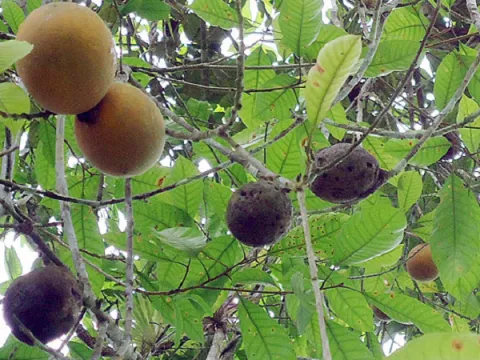
The fruit of the Ecclinusa is biologically significant, serving as a food source for various forest fauna, which aids in seed dispersal. Research into this genus often focuses on the phytochemical properties of the latex and the medicinal potential of its secondary metabolites. As global interest in sustainable tropical forestry grows, understanding the growth cycle and environmental needs of Ecclinusa remains a priority for botanical conservationists.