
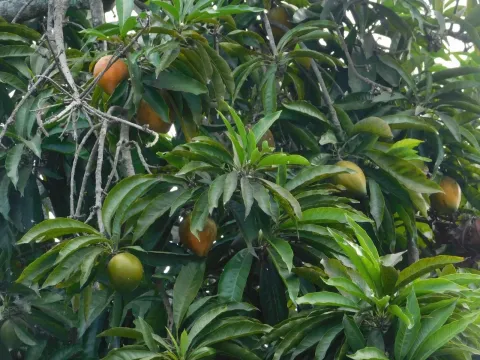
Canistel
Pouteria campechiana
Pouteria campechiana, commonly known as canistel or eggfruit, is an evergreen tropical tree belonging to the Sapotaceae family. It is prized for its ornamental value and its unique, custard-like fruits.
What the section contains
Canistel
The tree thrives in tropical and subtropical regions, requiring consistent warmth throughout the year. It does not tolerate frost and grows best in temperatures ranging from 25°C to 35°C.
Ideally, the trees should be planted in a location that receives full sunlight to ensure vigorous vegetative growth and optimal flowering. While seedlings may benefit from partial shade, mature trees are sun-loving.
Soil requirements are relatively specific: canistel prefers deep, fertile, and well-drained soils. It exhibits good tolerance for a variety of soil types, including limestone-based substrates, provided the drainage is efficient.
Adequate water management is crucial. While the tree can withstand short periods of drought once established, regular irrigation is essential during the flowering and fruit development stages to maximize harvest.
The fruit of Pouteria campechiana is oval or spindle-shaped, featuring a skin that turns bright yellow or orange when ripe. The flesh has a texture reminiscent of hard-boiled egg yolk, which gives the plant its common name.
A single mature, healthy tree can produce an impressive yield of 150 to 500 fruits per season. The fruit is rich in carotenes, niacin, and other essential vitamins, making it a healthy dietary addition.
In culinary applications, the fruit is eaten fresh or used in custards, smoothies, and ice creams. Because of its starch content, it serves as a natural thickening agent for various beverages and desserts.
The timber of the canistel tree is also economically valuable. It is dense, strong, and highly resistant to decay, making it suitable for construction, furniture making, and tool handles.
Recent agricultural trends include developing processed flour from the fruit, which allows for longer storage and wider distribution in the health food market.
Scale insects and mealybugs are the primary pests affecting Pouteria campechiana. They typically cluster on tender shoots and leaf undersides, potentially weakening the tree if left untreated.
Fruit flies pose a significant threat to the ripening crop. Integrated pest management strategies, including the use of pheromone traps and fruit bagging, are necessary to protect the harvest from infestation.
Fungal diseases like anthracnose can be problematic, especially in areas with high humidity or poor canopy ventilation. Regular pruning is recommended to open the tree structure and improve airflow.
Root rot is often the result of waterlogged soil conditions. Ensuring proper drainage is the most effective way to prevent this disease, as chemical treatments are often ineffective once the root system is compromised.
Competition from aggressive weeds can stunt growth, particularly in young orchards. Keeping the base of the tree clear through mulching or cultivation is vital for early development.
Harvesting requires precision as the fruits mature at different times. Growers should perform multiple selective pickings to ensure each fruit is harvested at the peak of its ripeness.
The fruit is ready for harvest when it turns deep yellow and yields slightly to gentle pressure. It should be clipped carefully with a piece of the stem attached to prevent decay at the point of detachment.
Post-harvest handling is critical because the ripe fruit is delicate and bruises easily. Using padded containers and careful packing methods helps maintain quality during transit to the market.
Canistel fruits can continue to ripen off the tree, allowing for some flexibility in timing. They can be stored in cool, well-ventilated areas to slow down the metabolic rate and extend shelf life.
Successful commercial harvesting relies on careful labor management and strict adherence to handling protocols to prevent the spoilage of this sensitive tropical produce.