
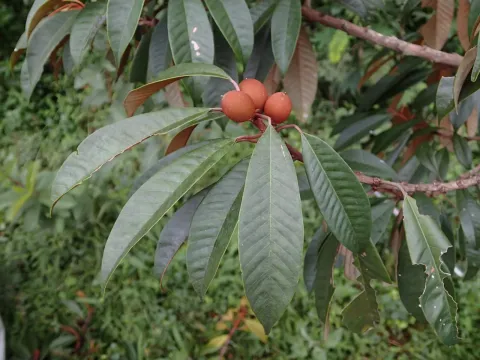
Chrysophyllum boivinianum
Chrysophyllum boivinianum
Chrysophyllum boivinianum is a tropical woody plant species belonging to the Sapotaceae family. It is native to the tropical forests of Africa and Madagascar, where it thrives in environments with high rainfall and warm temperatures throughout the year, establishing itself as a significant component of local biodiversity.
What the section contains
Chrysophyllum boivinianum
The cultivation of this species requires specific environmental conditions, primarily deep, well-drained, and nutrient-rich soils. Being a plant of the rainforest understory, it performs best in locations that offer protection from intense, direct solar radiation in its youth, while requiring consistent soil moisture to support its metabolic processes.
Botanically, this tree is recognized by its dense foliage and the presence of laticifers throughout its vegetative organs. The leaves are typically coriaceous, often displaying a distinct pubescence on the underside, which acts as a protective layer against desiccation and helps in maintaining the plant's water balance during drier intervals.
The economic utility of the tree is currently concentrated on local use, particularly regarding its timber, which is valued for craftsmanship and structural work. Furthermore, the tree plays a supportive role in local ecosystems, and various parts of the plant are traditionally utilized for their potential phytochemical properties.
Regarding agrotechnical practices, maintaining high humidity levels is crucial for the development of Chrysophyllum boivinianum. Proper management includes regular organic mulching to prevent soil compaction and to sustain the mycorrhizal activity that is essential for its healthy growth. Any commercial exploitation must respect the limits of its natural resilience to environmental stressors.