
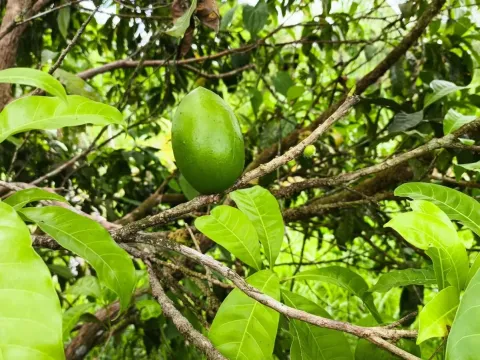
Abiu
Pouteria caimito
Abiu (Pouteria caimito) is a tropical, evergreen tree belonging to the Sapotaceae family. It is native to the upper Amazon basin and is widely cultivated in tropical regions across South America, Southeast Asia, and northern Australia.
What the section contains
Abiu
The species requires a strictly tropical climate with warm, stable temperatures year-round. It is highly intolerant of frost, and even minor cold snaps can cause significant damage to the canopy and overall health of the tree.
For optimal growth, Abiu needs deep, fertile, and well-drained soils with high organic matter content. It performs best in soil pH levels ranging from 5.5 to 7.5, which allows for efficient nutrient uptake.
High humidity and consistent rainfall are crucial for the development of healthy foliage and fruit set. In regions with marked dry seasons, an irrigation system is necessary to prevent water stress and flower drop.
The tree typically grows to a height of 10 to 20 meters in the wild, though growers often practice structural pruning to keep trees at a manageable size, facilitating easier harvest and pest monitoring.
Abiu trees are prolific producers, often yielding several hundred fruits per tree annually. Grafted trees typically begin bearing fruit within 2 to 4 years after planting, significantly faster than seed-grown specimens.
The fruit is a round or elliptical berry with a smooth, bright yellow skin when ripe. The pulp is translucent, sweet, and gelatinous, offering a delightful flavor that is often compared to a caramel-flavored custard.
The primary use of Abiu is fresh consumption, as it is prized for its delicious texture and nutritional profile, which includes significant amounts of vitamin C, calcium, and phosphorus.
The fruit is also commonly utilized in salads, sorbets, ice creams, and various yogurt-based desserts. Due to its delicate nature, it is primarily a local market crop rather than a major international export commodity.
In addition to the fruit, the wood of the tree is quite dense and durable, making it useful for local construction and high-quality tool handles in some rural communities.
Fruit flies represent the most serious threat to Abiu production, as they deposit eggs in the ripening skin, causing the fruit to decay rapidly. Fruit bagging is a common manual practice used to mitigate this damage.
Scale insects and mealybugs are the most prevalent sap-sucking pests. These can be managed through natural predators or the application of horticultural oils during the early stages of an infestation.
Fungal diseases, such as leaf spot or anthracnose, can occur in environments with poor air circulation or excessive moisture. Pruning for light and air penetration is a vital preventative measure.
Root rot, often caused by poorly drained soils, can lead to sudden tree decline. Proper site selection and avoiding heavy, clay-rich soils are the most effective ways to prevent this issue.
Integrated pest management (IPM) practices, including the use of pheromone traps and maintaining diverse orchard ecosystems, are recommended to sustain tree health and fruit quality.