
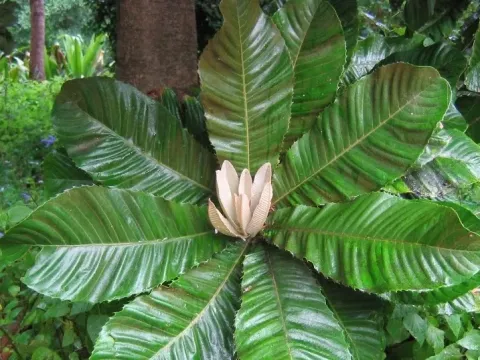
Chrysophyllum imperiale
Chrysophyllum imperiale
Chrysophyllum imperiale is a magnificent evergreen tree belonging to the Sapotaceae family. Native to the Atlantic Forest of Brazil, this species is noted for its impressive structural form and dense, glossy foliage.
What the section contains
Chrysophyllum imperiale
The plant thrives in humid tropical climates with consistent temperatures throughout the year. It does not tolerate cold exposure, requiring protection against any drop below the optimal subtropical threshold to prevent leaf drop and dieback.
Soils for this crop must be fertile, rich in organic matter, and possess excellent drainage capabilities. Due to the sensitivity of its root system, it is vital to avoid waterlogged conditions, which can lead to rapid decay.
Light requirements are high, as the tree naturally occupies the upper layers of the canopy in its native range. Providing sufficient space is essential, as the species is known for its slow but steady vertical and lateral growth.
Cultural management involves precise irrigation practices to keep the soil moist but not soggy. Fertilization should be focused on providing a steady supply of nitrogen and micronutrients to maintain the deep green color of the leaves.
Fungal diseases are a primary concern, particularly during periods of high humidity and limited air circulation. Pathogens such as leaf spot fungi can compromise the aesthetic and physical health of the tree.
Scale insects and mealybugs are the most persistent pests affecting this plant. These insects congregate on the undersides of leaves and along young stems, extracting sap and weakening the plant's structural integrity.
Root system issues, including infections by soil-borne pathogens, often arise from poor soil management or compaction. Maintaining a light, porous soil structure is the best natural defense against these threats.
Spider mites may occasionally occur, especially in controlled environments where air humidity is insufficient. Their feeding activity leads to discolored foliage and reduced photosynthetic efficiency.
Managing these threats requires a proactive approach including regular inspections, proper pruning for airflow, and the use of targeted biological control agents when pest populations reach economic thresholds.