
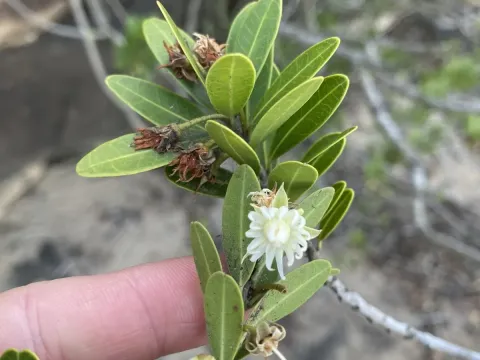
Red milkwood
Mimusops obovata
The Red milkwood (Mimusops obovata) is a prominent evergreen tree species belonging to the Sapotaceae family. Native to the coastal regions of Southern Africa, it is widely recognized for its robust growth habit and ecological significance.
What the section contains
Red milkwood
The plant thrives in tropical and subtropical climates, requiring consistently warm temperatures to remain healthy. Frost protection is essential, as the species is highly susceptible to cold damage which can permanently stunt its growth.
Soil requirements involve well-drained, nutrient-rich mediums that facilitate deep root development. Although tolerant of various soil types, the tree performs best in loamy soils that can retain enough moisture without becoming waterlogged.
Botanical characteristics include dark green, obovate leaves that are leathery in texture, and small, scented flowers appearing in clusters. The fruit produced by the tree is a fleshy berry, highly prized by local fauna and useful for human consumption.
Economic and horticultural uses of the species are diverse, ranging from timber production to landscape architecture. It is often planted as an ornamental or windbreak tree due to its dense canopy and resilience in coastal environments.
Pathogens affecting Mimusops obovata are primarily related to environmental stress, particularly root rot caused by stagnant water. Ensuring proper drainage is the most effective cultural practice to mitigate these issues.
Pests such as scale insects and aphids may infest young foliage. Monitoring the tree regularly and applying horticultural oils or organic soap solutions is usually sufficient to manage these infestations without harming the ecosystem.