
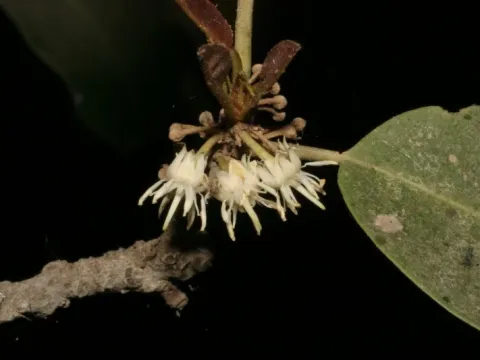
Manilkara obovata
Manilkara obovata
Manilkara obovata is a distinctive evergreen tropical tree belonging to the Sapotaceae family. It is native to humid tropical zones, thriving in environments that provide consistent warmth and rainfall throughout the year.
What the section contains
Manilkara obovata
The plant demands fertile, well-drained soil to thrive. It is particularly sensitive to waterlogging, which can lead to root system degradation, making proper drainage design a prerequisite for successful cultivation.
The climate requirements for this species include temperatures typically ranging between 22 and 30 degrees Celsius. It prefers full sunlight, though young specimens may benefit from light shading to protect them from intense radiation.
Botanically, the tree is noted for its leathery, obovate-shaped leaves that help regulate transpiration. As it matures, the tree develops a dense canopy, which is characteristic of the genus Manilkara.
Agronomic practices for this culture emphasize consistent organic fertilization and the maintenance of soil moisture through regular mulching. This prevents the soil surface from crusting and helps maintain a stable root temperature.
The primary agricultural use of Manilkara obovata revolves around its edible fruit, which is valued for its nutritional profile and distinctive taste. Local populations often incorporate these fruits into various traditional culinary preparations.
Beyond its edible qualities, the timber of this species is highly regarded for its physical properties. It is characterized by high density, strength, and remarkable resistance to decay, making it suitable for high-end woodwork.
Some varieties of the genus are known for latex production, and although Manilkara obovata is less focused on industrial extraction, its sap has historical and cultural significance in regional craft production.
Yield efficiency is directly linked to environmental conditions, particularly pollinator availability and soil nutrient availability. Well-managed orchards can provide reliable harvests when specific local climatic cues are met.
Harvesting should be done manually to ensure the integrity of the fruit's skin. Post-harvest cooling is essential to maintain fruit quality and shelf life, as the fruit can degrade quickly in the tropical heat if not processed promptly.
Pest management for Manilkara obovata focuses primarily on controlling leaf-eating insects. Integrated pest management strategies are recommended, utilizing biological controls to preserve the ecological balance of the orchard.
Fungal pathogens affecting the roots pose a major threat, particularly in regions with high rainfall where drainage may be suboptimal. Strict irrigation control and the removal of fallen debris are vital for disease prevention.
Nematode infestations can interfere with nutrient uptake, leading to stunted growth. Using certified disease-free rootstocks and maintaining proper spacing between trees are standard preventative protocols in commercial plantings.
Epiphytic plants or parasitic vines can attach to the trunk, competing for nutrients and space. Regular maintenance, including the removal of these organisms, ensures the vigor of the main tree.
Overall resilience is optimized by creating a healthy soil biome. Trees that receive balanced fertilization and are grown in suitable soil conditions demonstrate far greater resistance to biotic and abiotic stresses.