
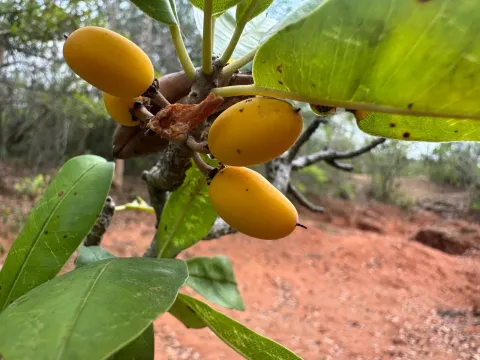
Manilkara hexandra
Manilkara hexandra
Manilkara hexandra is an evergreen tree belonging to the Sapotaceae family, native to tropical Asia. It is a robust species well-regarded for its ability to thrive in challenging tropical environments where other crops might fail.
What the section contains
Manilkara hexandra
The tree performs best in well-drained, sandy to loamy soils, showing significant tolerance to poorer soil conditions. Its deep root system allows it to efficiently extract nutrients and water from diverse soil profiles.
It is a sun-loving plant that requires full exposure to thrive and produce consistent yields. The ideal climate for Manilkara includes high temperatures and distinct wet and dry seasons typical of tropical regions.
While the tree is highly drought-tolerant once established, young saplings require consistent watering during their first growth stages. Proper spacing is essential to ensure that individual trees have enough space for their extensive crown development.
Agricultural management is relatively low-maintenance, making it an excellent choice for agroforestry projects. The tree grows slowly, but its longevity and hardiness provide a stable long-term return for landowners.
Manilkara hexandra provides edible berries that are sweet and widely appreciated in local cuisines. The fruit yield increases significantly as the tree matures, with mature trees producing substantial harvests annually.
Beyond its culinary value, the tree is a source of high-quality, extremely hard timber. This wood is highly valued in construction and furniture making due to its natural resistance to decay and termites.
The seeds of the fruit contain fatty oils that are utilized in traditional medicine and industrial applications. This diversification of products makes Manilkara a valuable asset for sustainable tropical farming.
The leaves and bark possess medicinal properties, often used in folk remedies for their astringent and antiseptic qualities. These secondary uses add to the overall economic value of the plantation.
Systematic pruning is recommended to maintain crown shape and improve light penetration, which directly impacts fruit production. Proper management ensures that the tree remains productive for decades.
Fungal pathogens represent the primary threat to bark health, particularly during periods of high humidity. Ensuring proper air circulation through orchard management is the most effective preventative strategy.
Fruit flies and various beetles can pose risks to the crop yield, necessitating an integrated pest management approach. Utilizing biological controls and pheromone traps can significantly reduce pest-related damage.
Root rot can become an issue in waterlogged soils, making site selection and drainage critical. Maintaining healthy soil structure helps prevent these conditions and promotes tree vigor.
Leaf-feeding insects may occasionally impact sapling growth, requiring periodic monitoring and organic treatments if necessary. Maintaining tree health through balanced nutrition helps the plants withstand moderate insect pressure.
Invasive viruses affecting leaf growth can spread if not addressed; thus, sanitation measures such as removing infected parts are crucial. Keeping the planting area clean prevents the buildup of potential pathogens.
Harvesting should be conducted when the fruit reaches full maturity, usually indicated by a distinct change in skin color. Timing is essential, as unripe fruit lacks the required sweetness and flavor profile.
Hand-picking is the standard harvesting method, as the fruit is delicate and prone to bruising. Using appropriate ladders and picking tools ensures that the harvest is efficient and safe for both the picker and the tree.
Post-harvest handling involves sorting by size and maturity to prepare for distribution. Proper cleaning and packaging minimize post-harvest losses and improve marketability for fresh consumption.
Harvesting in the early morning helps retain the fruit's quality by avoiding the peak heat of the day. This practice is vital for maintaining the freshness of the berries during storage and transit.
Storage in cool, ventilated conditions is recommended for short-term preservation before reaching the market. Efficient logistics and timely sales are key to maximizing the profitability of the harvest season.