
Chrysophyllum sanguinolentum
Chrysophyllum sanguinolentum
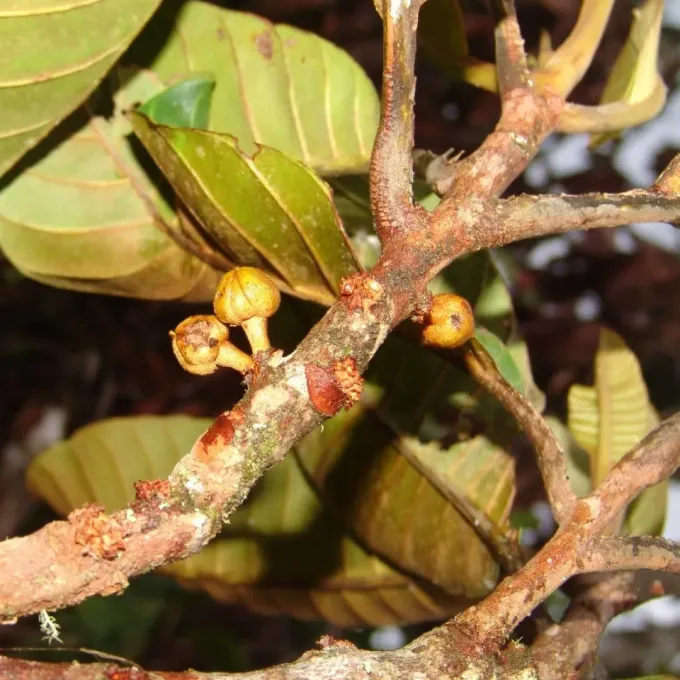
Description
Growing requirements
Chrysophyllum sanguinolentum belongs to the Sapotaceae family, a group of plants widely distributed in tropical and subtropical regions. This species is typically found in humid evergreen forest ecosystems.
The plant demands a consistent tropical climate with high temperatures year-round. It is highly sensitive to cold and requires protection from any freezing conditions to maintain healthy growth and physiological development.
Soil requirements are strict, favoring deep, well-drained, and nutrient-rich loamy soils. Proper drainage is essential to prevent root rot, which is a common issue in overly saturated tropical substrates.
High relative humidity is necessary for the optimal development of this tree. It thrives in environments where rainfall is evenly distributed or where supplementary irrigation can mimic natural precipitation patterns.
Agronomic practices include the application of organic matter to mimic the forest floor environment. Mulching is recommended to stabilize soil temperature and retain moisture in the top layer of the ground.
Harvesting
The primary economic interest in this species lies in its ability to produce latex. Harvesting involves controlled tapping of the bark, a method that requires precision to ensure the longevity of the individual tree.
Wood from this species is highly regarded for its structural integrity and resistance to biological decay. It is often harvested for artisanal projects and local construction where durability is a priority.
While less common in large-scale commercial fruit production, the fruits are occasionally gathered for subsistence. Harvesting is conducted by hand when the fruits reach the desired maturity level.
Careful monitoring of the tree's health during the tapping season is crucial. If the tree shows signs of stress, harvest cycles must be paused to allow the plant to recover its energy reserves.
Post-harvest processing involves filtering the raw latex to remove debris and drying the harvested timber in ventilated, shaded areas to ensure uniform moisture content and prevent surface cracking.