
Buffalo nut
Pyrularia pubera
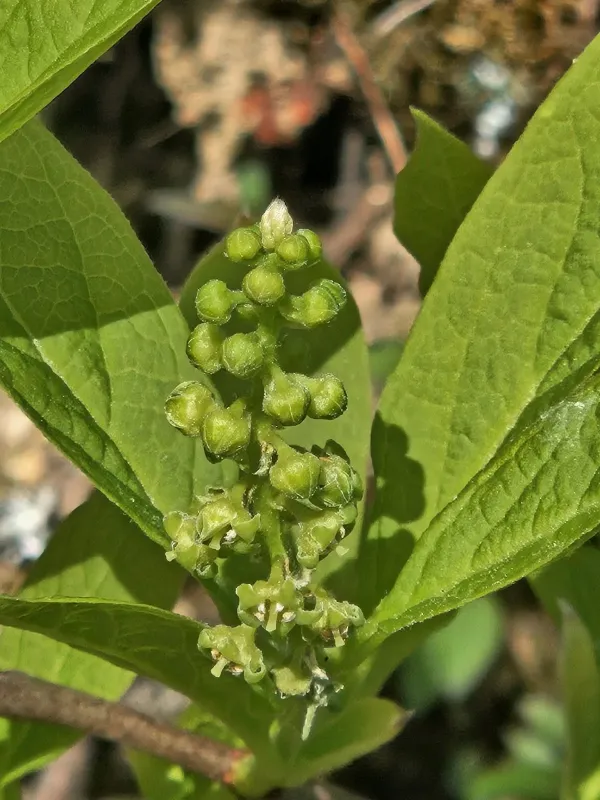
Description
Growing requirements
Buffalo nut (Pyrularia pubera) is a deciduous shrub classified within the Santalaceae family, distinguished by its unique hemiparasitic lifestyle.
Native to the southeastern United States, particularly the Appalachian Mountains, it thrives in cool, moist, and shaded forest environments.
The plant requires deep, acidic, and organically rich soils that remain consistently moist throughout the growing season for optimal development.
As a hemiparasite, it possesses haustoria on its roots, which must attach to the roots of nearby woody plants to extract essential water and nutrients.
Success in cultivation is dependent on creating a microclimate that mimics its natural habitat, with protection from extreme heat and drought being critical.
Yield
The fruit of the Buffalo nut is a pear-shaped drupe that contains a single, large seed characterized by its high lipid and oil content.
While historically interesting for its oil, commercial yields remain non-existent due to the plant's dependence on host species for its energy requirements.
The harvesting process is manual and rare, occurring once the fruits mature in the late summer or early autumn months.
Productivity is highly variable and directly linked to the health and vitality of the trees acting as hosts, making standardized crop management difficult.
Future agricultural efforts would require breakthroughs in grafting or controlled hosting techniques to ensure consistent and sustainable production levels.
Main diseases and pests
Like many species in its native range, Buffalo nut is susceptible to standard forest pathogens, including various leaf-spot fungi and powdery mildews.
Insect pests such as leaf miners and caterpillars may cause localized defoliation, which stresses the shrub and reduces its parasitic efficiency.
The loss of specific native tree species through deforestation or forest decline poses an existential threat to the survival of the plant.
Soil compaction and changes in drainage patterns within its habitat can disrupt the underground network, leading to rapid decline of individual shrubs.
Invasive plant competition poses a significant threat, as exotic species may outcompete native hosts for water or directly affect soil pH levels.