
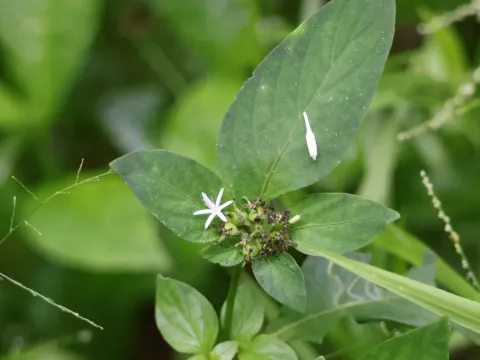
Virectaria
Virectaria
Virectaria is a genus of tropical plants belonging to the Rubiaceae family. These plants are typically found in the understory of tropical forests, appearing as herbaceous perennials or small subshrubs that thrive in specialized, humid microclimates within their native African range.
What the section contains
Virectaria
Successful growth of Virectaria depends on maintaining high atmospheric humidity and consistent warm temperatures throughout the year. They prefer nutrient-rich, well-draining soils that mimic the forest floor composition, typically exhibiting a slightly acidic pH level.
In a controlled cultivation setting, these plants require diffused light or partial shade to avoid stress and foliar damage from direct sun exposure. Precise moisture management is crucial, as the root systems are sensitive to both waterlogging and severe drought conditions.
From a botanical standpoint, the genus displays characteristic Rubiaceae traits, including opposite leaf arrangement and specific floral structures. The vegetative development is highly adapted to the high-competition environment of tropical forest undergrowth, resulting in efficient nutrient utilization.
The agricultural and economic utility of Virectaria is currently centered on pharmacological exploration. Researchers examine these plants for their secondary metabolites, aiming to identify active compounds that could be useful for drug development and botanical medicine.