
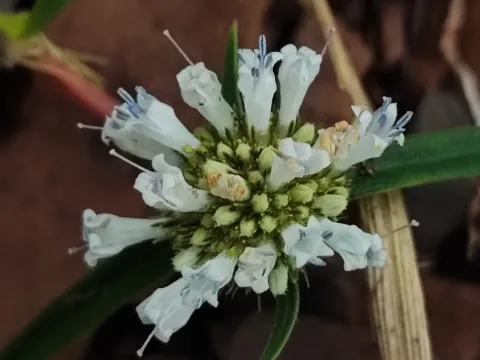
Spermacoce tenella
Spermacoce tenella
Spermacoce tenella is a herbaceous plant species belonging to the family Rubiaceae. Native to the tropical regions of South America, it thrives in diverse ecosystems, ranging from open grasslands to the margins of forest habitats where conditions are sufficiently humid and warm.
What the section contains
Spermacoce tenella
The morphology of this plant is characterized by slender stems and opposite leaves, which is a classic feature of the Rubiaceae family. Its growth habit is primarily decumbent to erect, allowing it to occupy available space efficiently in its native competitive environment.
Climatic requirements for Spermacoce tenella are strictly tropical. It demands consistent warm temperatures and high relative humidity to complete its life cycle. It is highly susceptible to chilling injury and cannot withstand temperatures near the freezing point, making it suitable only for tropical or greenhouse cultivation.
Regarding soil conditions, this plant prefers well-drained, sandy-loam soils that are rich in organic matter. While it is quite adaptable, poor drainage is a limiting factor for its root system development, often leading to rapid decline in overly compacted soil conditions.
Agricultural management of such species usually involves ensuring proper spacing to maintain airflow. Given its botanical profile, it is often studied for its potential in medicinal research or as part of specialized tropical forage management systems, although it is not a major commodity crop.
Pathogenic threats include various fungal infections, particularly those that manifest as foliar blight or root rot during periods of excessive rainfall. Monitoring for early signs of lesions on leaves is crucial for maintaining plant health in controlled environments.
Insect pests such as thrips and aphids are the most common herbivores affecting the plant. These pests feed on the succulent parts of the vegetation, which can retard growth and significantly reduce the overall vitality of the plant stand during the vegetative phase.