
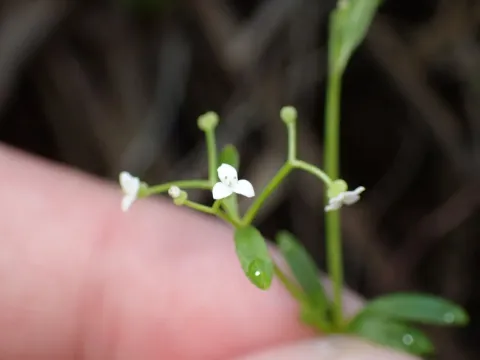
Stiff marsh bedstraw
Galium tinctorium
Stiff marsh bedstraw (Galium tinctorium) is a perennial herbaceous plant belonging to the Rubiaceae family, historically valued for the dyeing potential of its roots.
What the section contains
Stiff marsh bedstraw
Seeds should be sown in late autumn or early spring, as they require cold stratification to break dormancy and ensure uniform germination.
When planting, seeds should be covered with a light layer of soil, no deeper than 1-2 cm, to maintain optimal moisture levels for the emerging seedlings.
For commercial cultivation, vegetative propagation through root cuttings is often preferred, as it allows for quicker establishment and more uniform plant development.
Seedlings or cuttings should be spaced appropriately to allow for sufficient airflow, which is essential to prevent fungal outbreaks in the young plantation.
The plant thrives in moist, well-drained soils and is well-adapted to habitats with moderate water availability, preferring neutral to slightly acidic pH levels.
A sunny or partially shaded location is optimal, as Galium tinctorium requires adequate light to synthesize the compounds within its root system effectively.
Soil quality is paramount; incorporating organic matter before planting improves soil structure and promotes healthier root growth for future harvests.
While the plant is hardy and survives moderate climate fluctuations, it is sensitive to prolonged waterlogging, which can damage its root system.
Consistent moisture management and the removal of competing weeds are the most critical agrotechnical practices during the first two years of the crop's cycle.
Yielding high-quality root material requires patience, as the roots reach their peak concentration of dye compounds after three to four years of growth.
Regular maintenance, including weeding and soil aeration between rows, directly impacts the root mass accumulation and overall productivity per hectare.
When cultivated in favorable conditions, the plant produces a significant amount of root biomass, which can be harvested sustainably.
Yield efficiency is increased by selecting sites with deep, loose soil profiles that allow the roots to expand without restricted growth.
Successive harvesting schedules can be implemented to ensure a steady supply of raw material for artisanal or industrial dye production needs.
Like many species in the Rubiaceae family, the plant can be susceptible to powdery mildew if the planting density is too high or airflow is restricted.
Soil-dwelling larvae, such as wireworms, pose a threat to the developing root systems, potentially leading to stunted plant growth and yield loss.
Root rot caused by excessive moisture or poor drainage is a significant concern that requires proactive soil management and site selection.
Insects like aphids may infest the foliage during warm periods, though they rarely cause fatal damage if the plant is otherwise healthy and well-maintained.
- Implement systematic crop rotation to disrupt pest life cycles.
- Ensure proper drainage channels are dug around the plot.
- Conduct regular manual weeding to reduce habitat for potential pests.
The harvesting process involves carefully digging up the roots after the growing season has concluded, usually in the late autumn months.
Roots must be washed immediately after extraction to remove soil debris, which prevents contamination and degradation of the dye compounds.
Drying should take place in a cool, shaded, and well-ventilated area, as exposure to direct heat or sunlight can reduce the quality of the pigments.
Once completely dried, the roots are typically processed into smaller pieces or powder to maximize surface area for future extraction processes.
Proper storage in airtight containers away from moisture ensures that the botanical material retains its chemical integrity for an extended period.