
Stenophylla coffee
Coffea stenophylla
Description
Growing requirements
Stenophylla coffee (Coffea stenophylla) belongs to the Rubiaceae family. This evergreen shrub or small tree is native to West Africa, primarily found in regions across Guinea, Sierra Leone, and Ivory Coast.
The plant is highly regarded for its ability to withstand warmer temperatures than Arabica, making it a valuable candidate for breeding programs aimed at adapting to climate change. It thrives in humid tropical forest ecosystems.
Successful cultivation requires high humidity and protection from severe frosts. Optimal growth temperatures range between 20–28 degrees Celsius, and the plant shows remarkable resilience to moderate drought conditions.
Well-drained soils rich in organic matter with a slightly acidic pH are ideal for this species. Agricultural practices often involve shade-growing techniques to protect young seedlings from intense direct sunlight.
While historically overshadowed by dominant commercial varieties, Stenophylla is experiencing a resurgence in interest due to its exceptional sensory profile, often compared to high-end Arabica cultivars.
Yield
The yield of Stenophylla coffee is generally lower compared to Robusta, which has limited its widespread commercial adoption. The berries have a longer maturation period, requiring precise timing during the harvest cycle.
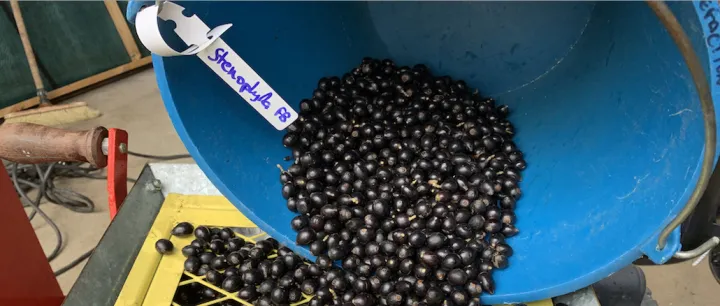
A distinctive botanical feature is the appearance of the fruit, which turns deep black upon ripening. Due to the lack of uniform ripening, manual picking remains the standard method to ensure quality.
Researchers are exploring hybridization potential to improve yields without compromising the unique flavor traits. Farmers currently treat Stenophylla as an experimental or high-value niche product.
Quality parameters are highly dependent on elevation, with higher altitudes favoring the development of complex flavor notes. Proper post-harvest processing and drying are essential to maintain the bean integrity.
As traditional coffee zones become less viable due to warming trends, the economic outlook for Stenophylla is improving, positioning it as a future-proof crop for coffee growers.
Main diseases and pests
Major pests include the coffee berry borer and soil-borne nematodes, which thrive in high-moisture environments. Regular field inspections and monitoring are critical for effective integrated pest management.
Fungal pathogens such as coffee leaf rust (Hemileia vastatrix) pose a threat to various Coffea species. Stenophylla displays moderate resistance, though management programs should prioritize preventative measures.
Disease prevention relies on proper spacing, ensuring adequate airflow through the canopy to prevent microclimates favorable for fungal growth. Waterlogging must be avoided to prevent root rot issues.
Utilizing resistant rootstocks can significantly reduce the risk of infestation and disease. Strong plant immunity is achieved through balanced fertilization and maintaining optimal soil health.
Biological control, including the encouragement of natural predators, is a preferred strategy in sustainable coffee farming to minimize the reliance on chemical interventions.