
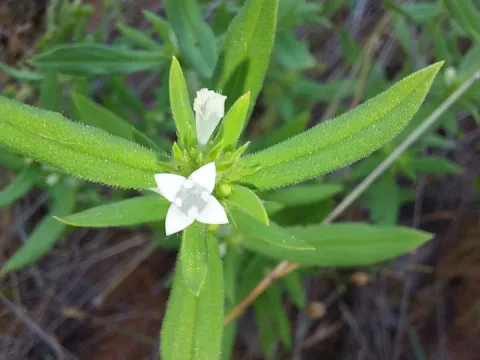
Spermacoce senensis
Spermacoce senensis
Spermacoce senensis is a herbaceous species belonging to the Rubiaceae family. Native to tropical Africa, this plant has adapted to diverse ecological niches within its natural range, demonstrating resilience in various warm-climate environments.
What the section contains
Spermacoce senensis
The botanical structure of the plant features branching stems with opposite, lanceolate leaves. Its inflorescences are dense, head-like clusters typically found at the tips of branches, which serve as a distinct characteristic for identification within the genus.
The climatic requirements for the species are strict, as it thrives only in regions with high average temperatures. It cannot survive in climates with frost or long-term cold snaps, making it an exclusive candidate for tropical and subtropical cultivation zones.
Regarding soil conditions, Spermacoce senensis prefers fertile, well-drained loams that retain sufficient moisture without becoming waterlogged. Proper aeration of the root system is essential, as the plant is susceptible to hypoxic stress in compacted or stagnant soils.
In terms of agricultural and industrial use, the plant is primarily evaluated for its chemical profile. Research into its phytochemical properties suggests potential applications in ethnopharmacology and the development of new plant-based botanical extracts.
Fungal pathogens, particularly those causing damping-off and root rot, represent the most significant threat to plant health. These diseases are usually triggered by excessive irrigation or lack of proper soil drainage.
Pest pressure from mites and aphids can significantly impact the leaf area and overall vigor of the crop. These pests thrive in dry, warm conditions and can quickly colonize fields if not monitored and managed through timely interventions.
Effective management strategies include the implementation of rigorous phytosanitary practices, such as removing debris and ensuring crop spacing allows for optimal airflow to prevent moisture accumulation.
Integrated pest management (IPM) is recommended to control infestations, focusing on biological controls where possible to maintain the purity of the raw material harvested for commercial use.
Growers should focus on early detection, as pests and pathogens can cause irreversible damage to the sensitive meristematic tissues of the plant if left untreated for extended periods.