
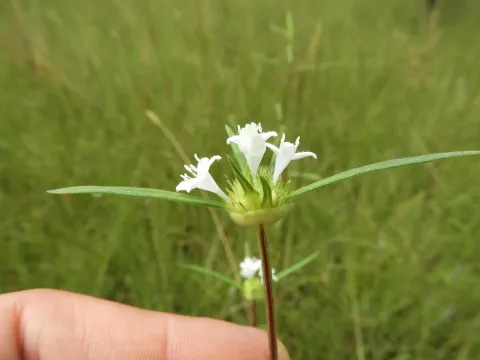
Spermacoce sphaerostigma
Spermacoce sphaerostigma
Spermacoce sphaerostigma is a member of the Rubiaceae family, native to tropical regions. This herbaceous perennial is known for its distinctive vegetative structure and adaptability to warm, humid environments. In agricultural contexts, it is increasingly viewed as a niche crop with potential applications in the botanical extract industry.
What the section contains
Spermacoce sphaerostigma
The plant features quadrangular stems and lanceolate, opposite leaves that showcase clear venation. Its small, whitish flowers are arranged in compact, globular clusters situated in leaf axils. The root system is moderately developed, providing a stable foundation for the plant in various tropical soil types.
For successful planting, the crop requires stable temperatures ranging between 22 and 28 degrees Celsius. Propagation is usually achieved through seeds or vegetative cuttings, depending on the desired scale of the plantation. Early stages of growth require careful attention to moisture levels to establish a healthy root system.
Regarding soil preferences, this species thrives in well-drained, fertile substrates with a neutral or slightly acidic pH. The plant is sensitive to waterlogging, which necessitates careful site selection and the installation of drainage systems in areas with high rainfall to prevent root decay.
The economic utility of Spermacoce sphaerostigma is primarily derived from its bioactive compounds. Scientific interest in this species centers on its potential for pharmacological use, as well as its role as a hardy ground-cover plant in tropical landscape management and soil conservation projects.
Climatic requirements are centered on maintaining high atmospheric humidity and avoiding exposure to sub-zero temperatures. In drought-prone tropical zones, supplementary irrigation is essential to maintain metabolic activity and prevent plant stress that could reduce overall biomass production.
Fertilization regimes should be adjusted according to growth stages. Nitrogen-rich fertilizers are beneficial during the intensive leaf-growth phase, while phosphorus and potassium applications are recommended as the plant approaches the reproductive stage to improve overall vigor.
Maintenance tasks include regular weeding, particularly during the establishment phase, as the plant can be slow to shade out competing vegetation. Mulching around the base of the plants helps retain soil moisture and maintains a stable temperature in the upper root zone.
The plant requires consistent but controlled watering. Drip irrigation is the most efficient method for this crop, as it delivers water directly to the root zone while minimizing the risk of foliage wetting, which can encourage fungal development in dense canopy conditions.
Crop rotation is a vital component of sustainable management. Planting Spermacoce sphaerostigma after other Rubiaceae members should be avoided to prevent the buildup of soil-borne pathogens and to ensure long-term soil fertility and health within the farm ecosystem.
Major threats to this crop include fungal infections of the roots and foliage, often induced by excess moisture or poor ventilation. Fusarium wilt and various forms of root rot pose significant risks, especially during the peak rainy seasons in tropical climates.
Pests such as aphids, whiteflies, and spider mites are common adversaries. These insects feed on the sap of the plant, causing leaf deformation and potential transmission of viral infections, which can severely impact both the quality and quantity of the harvested plant biomass.
Integrated Pest Management (IPM) is the recommended approach for this species. This involves regular scouting for early detection, the use of biological control agents such as predatory mites, and maintaining adequate spacing to ensure proper airflow through the canopy.
Sanitation practices play a critical role in disease control. Prompt removal and destruction of infected plants or debris help to isolate outbreaks and prevent them from spreading across the entire plantation, significantly reducing the need for chemical intervention.
When chemical applications are necessary, they must be used selectively and according to industry standards. Careful timing is required to ensure that the harvest remains free of chemical residues, meeting the quality requirements for pharmaceutical or botanical processing.