
Paederia lanuginosa
Paederia lanuginosa
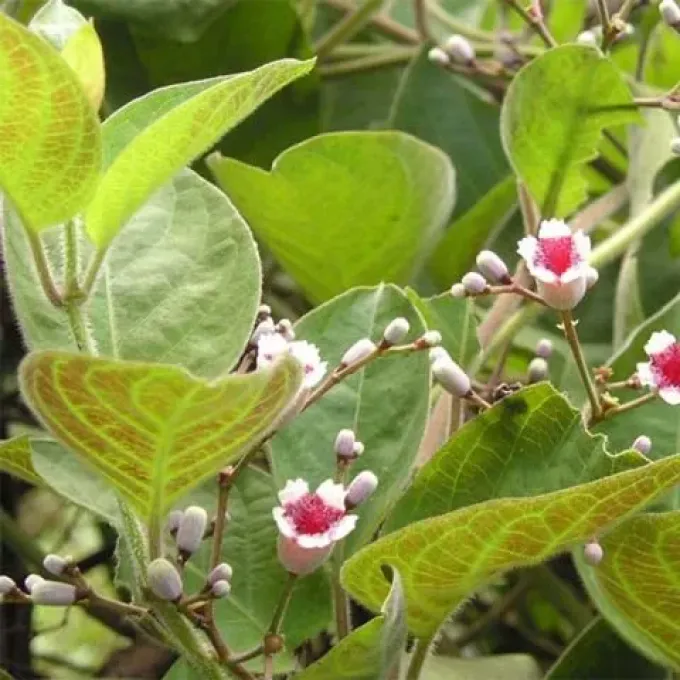
Description
Sowing dates
Paederia lanuginosa is a perennial climbing herb belonging to the Rubiaceae family. In agricultural practices, it is propagated either by seeds or through vegetative cuttings, the latter being preferred for uniform crop quality.
The ideal time for sowing is during the spring season when soil temperatures remain consistently above 20°C. For vegetative propagation, cuttings should be taken during active growth phases to ensure rapid rooting.
Seed germination is improved by pre-soaking seeds in warm water. Given their small size, seeds should be sown at a shallow depth, barely covering them with soil to allow sufficient light penetration.
Seedlings are transplanted to the field once the risk of frost has passed. As a climbing plant, it requires the immediate installation of trellis systems or support structures to facilitate vertical growth.
Planting density depends on the production goal; high-density planting is often used for maximum leaf yield, ensuring full ground cover shortly after the establishment of the plantation.
Growing requirements
Being a tropical species, Paederia lanuginosa thrives in warm climates. The optimal temperature range for robust vegetative growth is between 22°C and 30°C.
The crop prefers fertile, well-drained loamy soils with a neutral or slightly acidic pH. Waterlogging must be strictly avoided, as it significantly increases the risk of root rot.
While the plant exhibits moderate shade tolerance, full sun exposure is recommended for higher biomass production and better phytochemical profiles in the harvested leaves.
High moisture availability is essential during the active growing season. A consistent irrigation schedule is necessary, especially during dry spells, to prevent growth stunting.
Fertilization with organic compost or balanced nitrogen-rich mineral fertilizers promotes rapid development of vines and lush foliage, which are the main harvested parts of the plant.
Yield
Crop yield is heavily influenced by climatic conditions and the intensity of agricultural management. In tropical zones, the plant allows for multiple harvests per year due to continuous growth.
The leaves and stems are the primary economic products. With proper nutrient management and irrigation, the plant provides a consistent output of high-quality herbal biomass.
Maximum productivity is typically achieved from the second year onward, once the plant has fully established a strong root system and a dense network of climbing stems.
Regular pruning of older, woody stems is an effective agronomic practice to rejuvenate the plant, encouraging the growth of tender, fresh shoots that are more valuable for harvesting.
By implementing a systematic harvest approach, the plant is encouraged to branch more vigorously, which effectively increases the total yield per square meter for subsequent growth cycles.
Main diseases and pests
Common threats to this crop include fungal diseases, particularly root rot and leaf spots, which are often triggered by excessive moisture and poor air circulation within the canopy.
Pests such as aphids and spider mites can frequently infest the plants, feeding on the tender sap and reducing the quality of the raw herbal material through leaf distortion.
Integrated pest management, favoring biological controls such as natural predators or botanical soaps, is highly recommended to ensure the purity of the harvested leaves.
Proactive disease management involves maintaining proper row spacing to allow airflow and using raised beds or effective drainage systems to keep the root zone from becoming oversaturated.
Early-stage weed control is vital as young Paederia plants are sensitive to competition. Mulching is a highly effective strategy to suppress weeds and maintain soil moisture simultaneously.
Harvesting
Harvesting is performed manually by cutting the fresh shoots and leaves. The best time to harvest is at the onset of the flowering stage, which ensures optimal concentration of active chemical compounds.
Once harvested, the plant material must be processed immediately. Drying should be conducted in shaded, well-ventilated areas at temperatures below 40°C to preserve aroma and medicinal potency.
After thorough drying, the product should be stored in airtight containers away from direct sunlight to maintain long-term stability of its biological components.
In culinary applications, young leaves are preferred for their milder flavor; therefore, harvest schedules may be adjusted to target the specific developmental stage required by the market.
Using sharp, sanitized tools is crucial for harvesting to prevent crushing the stems, which allows for faster healing and helps the plant recover quickly for the next growth cycle.